 By Chris Follin
WINTER DRIVING
How to use tire chains in snow and ice
Tire chains are not a last-second magic trick in the worst part of the road. Practice fitting them before the storm, install them before you are stuck, tighten after a short roll, and drive like the chains are temporary traction, not invincibility.
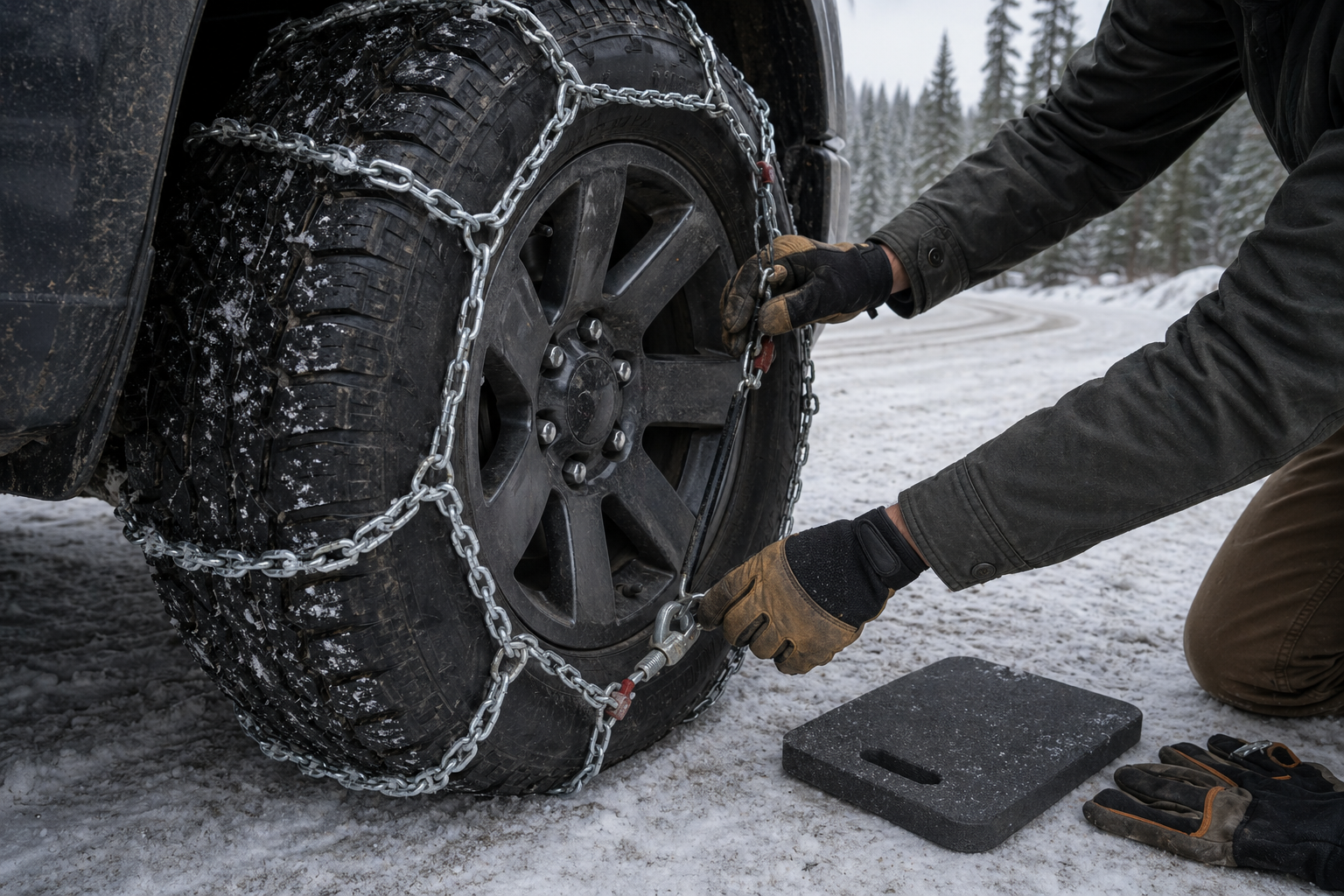
Practice before your hands are frozen
The roadside in a snowstorm is a terrible classroom. Fit the chains at home once so you know which side faces out, how the fasteners work, where the tensioner goes, and whether the chains actually clear your vehicle.
When the chain-control sign or road conditions say it is time, pull over in a safe chain-up area before the hill, not halfway up it. Put chains on the correct tires for your drivetrain and vehicle instructions. Then drive a short distance, stop, and retighten.
| Check | Why it matters | Fix before the trip |
|---|---|---|
| Correct size | Loose or wrong-size chains slap, break, and hit the vehicle. | Test fit on the actual tires mounted on the vehicle. |
| Clearance | Some vehicles cannot safely run bulky chains on certain tires or axles. | Read the manual and chain instructions; use the approved chain/cable type. |
| Drive axle | Chains on the wrong axle can create poor control or violate instructions. | Follow the vehicle manual, especially for AWD/4WD systems. |
| Speed rating | Chains are low-speed traction, not highway traction. | Know the chain maker's speed limit and drive slower if conditions demand it. |
CHAIN-UP FLOW
Do the annoying parts before the hill
Chains are a setup task, not a rescue plan after you are already sideways on a grade.
- 1. Practice dryFit them once at home so you know the fasteners and orientation.
- 2. Pull over earlyUse a safe chain-up area before the icy climb or descent.
- 3. Center and tensionRemove twists, center the chains, connect, and tension per instructions.
- 4. RetightenDrive a short distance, stop safely, and snug them again if required.
Speed is the enemy
Chains are for low-speed traction on snow and ice. Many chain makers cap speed around 30 mph, and some conditions demand slower than that. If they slap, vibrate, or hit the vehicle, stop. If the road is dry again, remove them when it is safe and legal to do so.
CHAIN MISTAKES
The stuff that ruins tires and fenders
Chains fail ugly when they are the wrong size, loose, twisted, or run too fast on the wrong surface.
Put them on before the problem
Chains are easiest and safest in a designated chain-up area or flat turnout. Waiting until you are stuck on a grade means traffic, cold hands, packed snow, and poor visibility all get involved.
Use the manual. Some vehicles have limited chain clearance, require cable-style chains, or allow chains only on certain axles. All-wheel drive does not automatically mean chain placement is obvious.
Install without turning it into a circus
Lay the chain out flat and remove twists. Drape it evenly over the tire or drive onto it depending on chain type. Connect the inside first if the design calls for it, then the outside, then tension. Keep hooks oriented so they do not dig into the tire sidewall.
Drive slowly for a short distance and retighten according to the chain instructions. Loose chains slap bodywork, brake lines, fenders, and suspension parts.
Drive like you still have limits
Chains are for snow and ice traction at low speed. They do not make braking distances normal. Avoid sudden throttle, hard braking, and sharp steering. Pull over if you hear slapping or feel vibration.
Remove chains when the road returns to dry pavement unless the conditions and product instructions say otherwise. Dry pavement wears chains and tires quickly and can damage the road.
Chains are behaving
- You practiced once before the trip.
- Chains are centered, snug, and not slapping.
- You stop and retighten after the first short roll.
Pull over and fix them
- You are learning in traffic with numb hands.
- Chains are loose, twisted, or installed on the wrong axle.
- You keep driving fast because the vehicle now moves forward.
Field note
Put chains on before ego says you can make it without them.