 By Chris Follin
TIRE SKILLS
How and why to air down tires
Airing down can improve comfort and traction on rough dirt, sand, and washboard because the tire can flex and spread load. It also adds heat, sidewall exposure, and risk if you drive fast or forget to air back up.
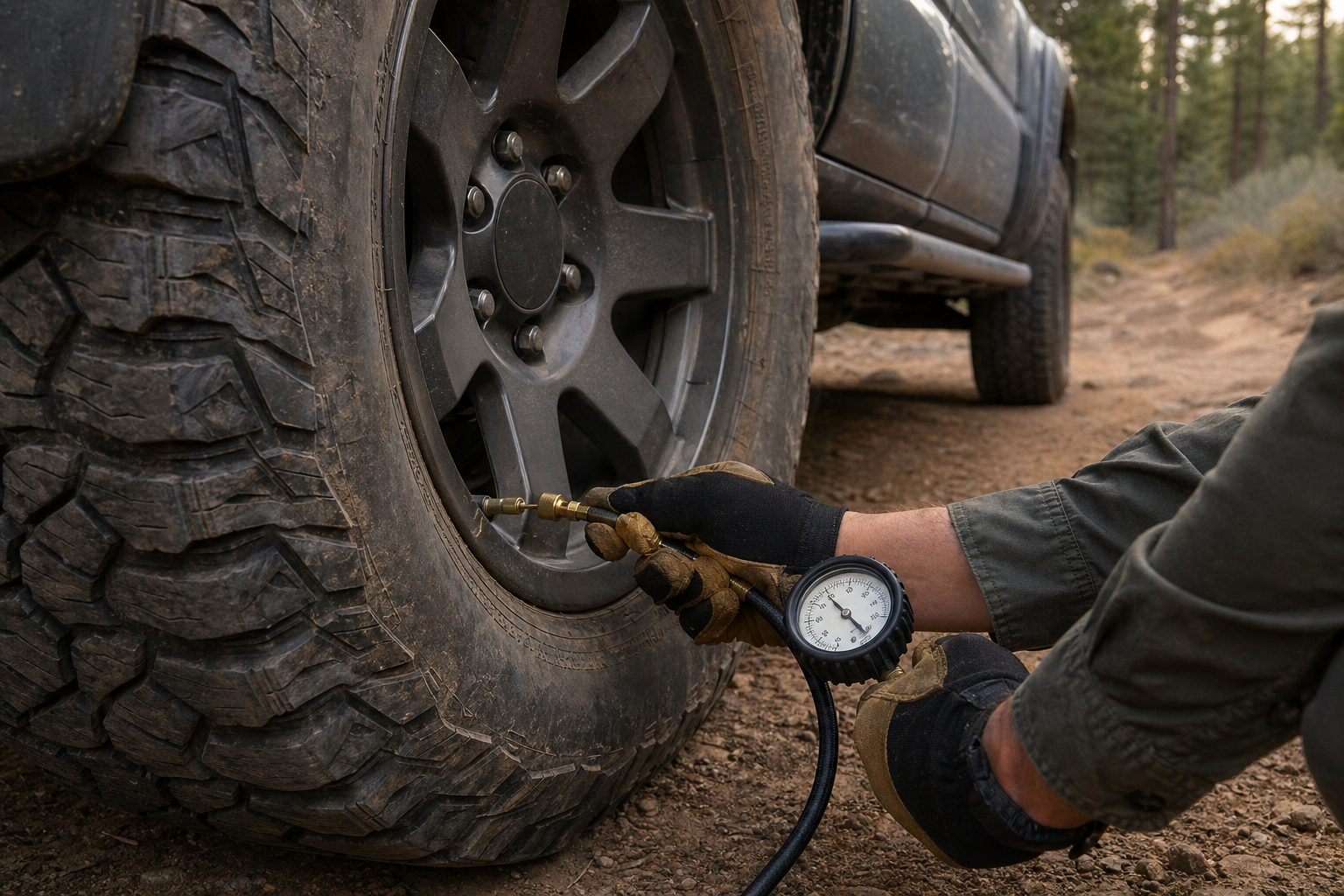
Airing down is a tool, not a personality
Lower pressure lets the tire conform to rough surfaces and lengthen the contact patch. On washboard it can calm the ride. In sand it helps the vehicle float instead of digging. On rocks it can help grip, but it also exposes sidewalls and wheels to damage.
The right pressure depends on tire size, load, wheel, terrain, speed, and how much risk you are willing to take. Start with a modest drop and learn your setup. The non-negotiable part is having a compressor to air back up before sustained pavement driving.
PRESSURE STRATEGY
Think in stages, not magic PSI
The right number depends on tire, wheel, load, speed, and terrain. A staged drop keeps you from turning a comfort fix into a sidewall or bead problem.
| Terrain | What airing down helps | What to watch |
|---|---|---|
| Washboard dirt | Softens chatter and helps the tire conform to small bumps. | Heat if you keep speed up after lowering pressure. |
| Sand | Longer contact patch and better flotation. | Too much throttle digs holes fast. |
| Rocks | Grip and ride comfort improve at low speed. | Sidewall cuts and pinching the tire against the wheel. |
| Pavement | Nothing worth chasing. | Underinflation builds heat and hurts handling. Air back up. |
STARTING RANGE
Use numbers as a conversation, not a command
Exact PSI advice gets people in trouble because a heavy truck on small wheels is not the same as a light truck on tall tires. Use the numbers below as a conservative starting conversation, then let your vehicle, tire shape, terrain, and compressor plan decide.
| Situation | Conservative move | Stop and add air if |
|---|---|---|
| Washboard or rough graded road | Small drop from normal road pressure, then drive slower. | Steering gets vague, tires heat up, or pavement is coming soon. |
| Sand or soft beach-style surface | Larger staged drop with speed kept low and compressor ready. | The sidewall folds hard in turns or the bead feels at risk. |
| Rocky trail | Drop only enough to gain compliance and grip at crawling speed. | Sidewalls are exposed, rims are contacting rocks, or you are pinching tires. |
| Loaded vehicle or trailer | Stay more conservative than an empty vehicle. | The tire looks overloaded or the rear end feels unstable. |
The compressor is part of the technique
If you cannot air back up, you are not airing down. You are gambling that the dirt section, speed, heat, and distance all cooperate until you find air.
When it helps
Rough dirt and washboard usually benefit from a modest pressure drop because the tire absorbs small impacts instead of hammering the suspension. Sand often needs a larger drop because flotation matters more than tread bite. Snow can be situational, and mud can punish bad judgment quickly.
If you are on sharp rock, low pressure can help grip but increases sidewall and wheel risk. Slow down and avoid pinching the tire between rock and rim.
How to do it
Park safely off the road. Check starting pressure. Set each tire to the same target or adjust by axle if your load demands it. Replace valve caps so dirt does not get into the stems. Drive slowly and feel the difference.
If steering feels vague, the tire looks overly bulged, or the sidewall is folding hard in turns, stop and add air. The tire should flex, not look like it is trying to peel off the wheel.
Air back up before speed
Underinflated tires build heat at speed and handle poorly. Airing down is for low-speed terrain, not highway comfort. Before pavement, use the compressor and bring the tires back to the pressure appropriate for the vehicle, tire, and load.
Check pressures again after a long dirt section or big temperature swing. Tires are one of the few parts of the vehicle that are cheap to check and expensive to ignore.
When it is working
- You know your starting pressure.
- You carry a compressor that can actually refill your tires.
- You slow down after airing down.
When to stop copying trail advice
- You copy a random PSI without considering load or wheel size.
- You drive fast on soft tires.
- You air down because everyone else did but have no way to air back up.
Field note
Airing down is only smart when airing back up is already solved. The compressor is not an accessory; it is the exit plan.