01
Start with a dependable fixed end
Tie one end to the first anchor with a bowline, two half hitches, or another fixed knot you trust. Do not start with a random wrap and hope the tension cleans it up later.
 By Chris Follin
KNOT SKILLS
The trucker's hitch is the knot system I reach for when a tarp line, camp clothesline, or utility rope needs to be actually tight. The trick is not just pulling harder. The trick is building a clean little pulley, tensioning it, and locking it without losing the tension you just earned.
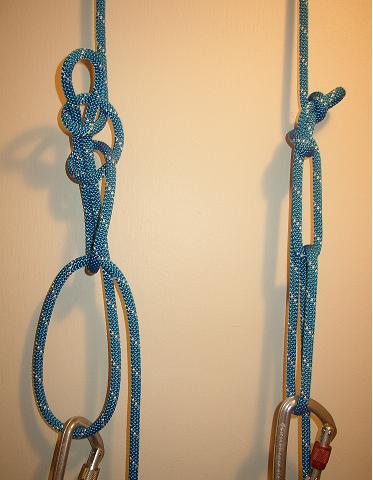
A trucker's hitch is not one magic knot. It is a tensioning system. One end is fixed. A loop in the middle acts like a pulley. The working end goes around the far anchor, comes back through the loop, and gives you enough leverage to tighten the line before you tie it off.
The reason people get bad results is usually not strength. It is geometry. The loop is in the wrong place, the line crosses itself, the lock-off is tied around the wrong strand, or the rope is pulling on something too weak for the amount of tension being added.
THE ROPE PATH
This is the part that has to be right: fixed end, midline loop, far anchor, back through the loop, pull, then lock off on the loaded line.
STEP BY STEP
This is the camp version: easy to remember, strong enough for light rope jobs, and honest about where it stops being the right tool.
Tie one end to the first anchor with a bowline, two half hitches, or another fixed knot you trust. Do not start with a random wrap and hope the tension cleans it up later.
Leave room between the loop and the far anchor so you have travel to pull. A loop jammed right against the anchor gives you almost no tensioning range.
Go around the anchor cleanly. Avoid bark-eating saw motion, sharp metal edges, and crossed strands that will grind when you pull.
This is the part that creates the advantage. The loop does not need to be huge. It needs to stay open and stay on the standing part while you pull.
Pull smoothly, not violently. If you are tightening a tarp, stop before the fabric, stitching, or grommet starts taking abuse.
While one hand keeps tension on the working end, tie two half hitches around the tensioned line. Dress them snug. Then let go and watch whether anything slips.
LOOP CHOICE
Every trucker's hitch needs a loop in the standing part. The best loop depends on how much load, how much you care about untying it, and how much knot memory you want to carry.
| Loop | Why use it | Tradeoff |
|---|---|---|
| Alpine butterfly | Stable, clean, good when the loop will see real tension. | Takes a little more practice. |
| Directional figure-eight | Strong, easy to inspect, points naturally toward the pull. | Can be bulky and may tighten hard. |
| Slip loop | Fastest camp shortcut for light tarp lines. | Can collapse or jam. Do not treat it like rated rigging. |
LOCK-OFF
The usual finish is two half hitches around the tensioned standing line. If you want quick release, make the last hitch slippery by passing a bight through instead of the full tail.
Do not tie the finish around the loose strand you are holding. The lock-off has to grab the loaded line, or it will relax the second you let go.
TROUBLESHOOTING
| Problem | Likely cause | Fix |
|---|---|---|
| The line relaxes when you let go | The lock-off is tied around the loose strand or the rope is too slick. | Tie the half hitches around the loaded standing line and test again. |
| You run out of pull before the line gets tight | The midline loop is too close to the far anchor. | Move the loop farther back so the working end has travel. |
| The loop jams into a hard lump | A slip-loop version was loaded too hard or dressed poorly. | Use an alpine butterfly or directional figure-eight for a cleaner loop. |
| The tarp corner, hook, or grommet starts distorting | The hitch is giving more leverage than the anchor can handle. | Stop tightening. Move the anchor, spread the load, or use less tension. |
| The rope is sawing across bark, metal, or fabric | The rope path crosses a sharp or high-friction edge. | Reroute it, pad the edge, or choose a better anchor. |
FIELD USE
MISTAKES
You run out of room before the line is tight. Put the loop farther back on the standing part so the working end has travel.
If the finish is tied around the loose side instead of the loaded line, the knot may relax immediately.
Crossed strands add friction, hide mistakes, and make the knot ugly to untie. Rebuild the path cleanly.
A trucker's hitch can rip a grommet, distort a seam, or bend a cheap hook. Tight is not automatically better.
PICK THE RIGHT TOOL
You need more tension than hand-pulling, but the job is still a light rope job: tarp, utility cord, clothesline, temporary shade.
You need an adjustable guyline that can be snugged and loosened repeatedly without rebuilding the whole system.
The load is heavy, expensive, sharp-edged, highway-speed, or able to hurt someone if it moves.
CHECKLIST
FAQ
It acts like a simple pulley system, but friction in the loop and around the anchor eats some of the theoretical advantage. In real camp use, think of it as "much easier to tension" rather than a clean math machine.
For light, low-risk loads around camp, maybe. For highway cargo, heavy loads, sharp gear, or anything that can hurt someone if it moves, use rated straps and proper tie-down points.
Usually because the loop choice was too simple for the load, the rope is soft, or you pulled hard on a slip-loop version. An alpine butterfly or directional figure-eight is easier to inspect and less annoying after load.
Use a slippery final half hitch by passing a bight through instead of the full tail. Only do that when accidental release would not create a hazard.
The trucker's hitch is one of the best camp knots because it solves a real problem: getting a line tight without hardware. But the moment the job becomes cargo, recovery, climbing, or anything with consequences, it stops being clever and starts being the wrong tool.