 By Chris Follin
SHOP SKILLS
How to read a tape measure
A tape measure is easy until the mark lands between the big numbers. Once you understand the pattern of halves, quarters, eighths, and sixteenths, reading it becomes a counting problem instead of a guessing problem.
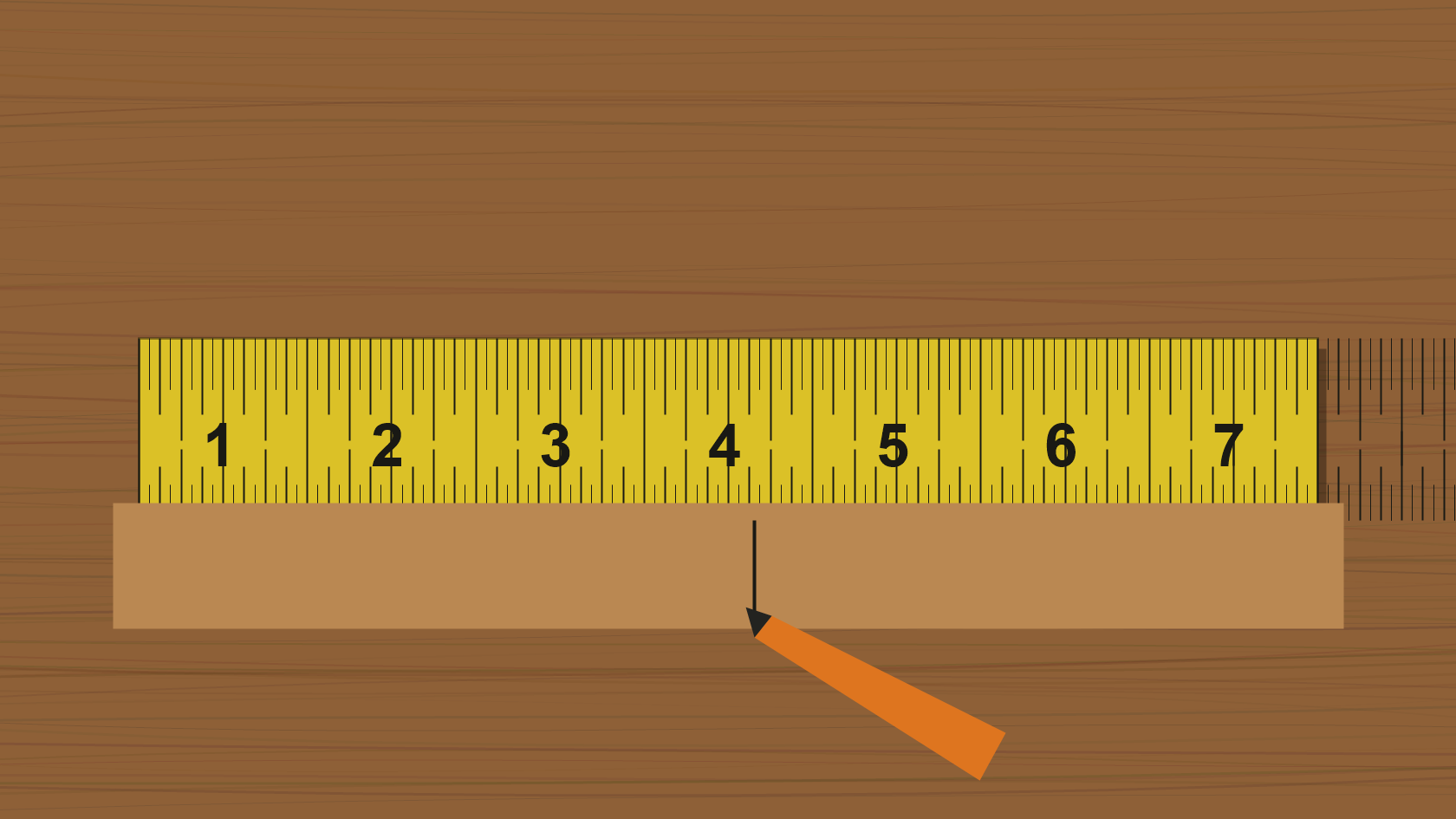
The marks have a hierarchy
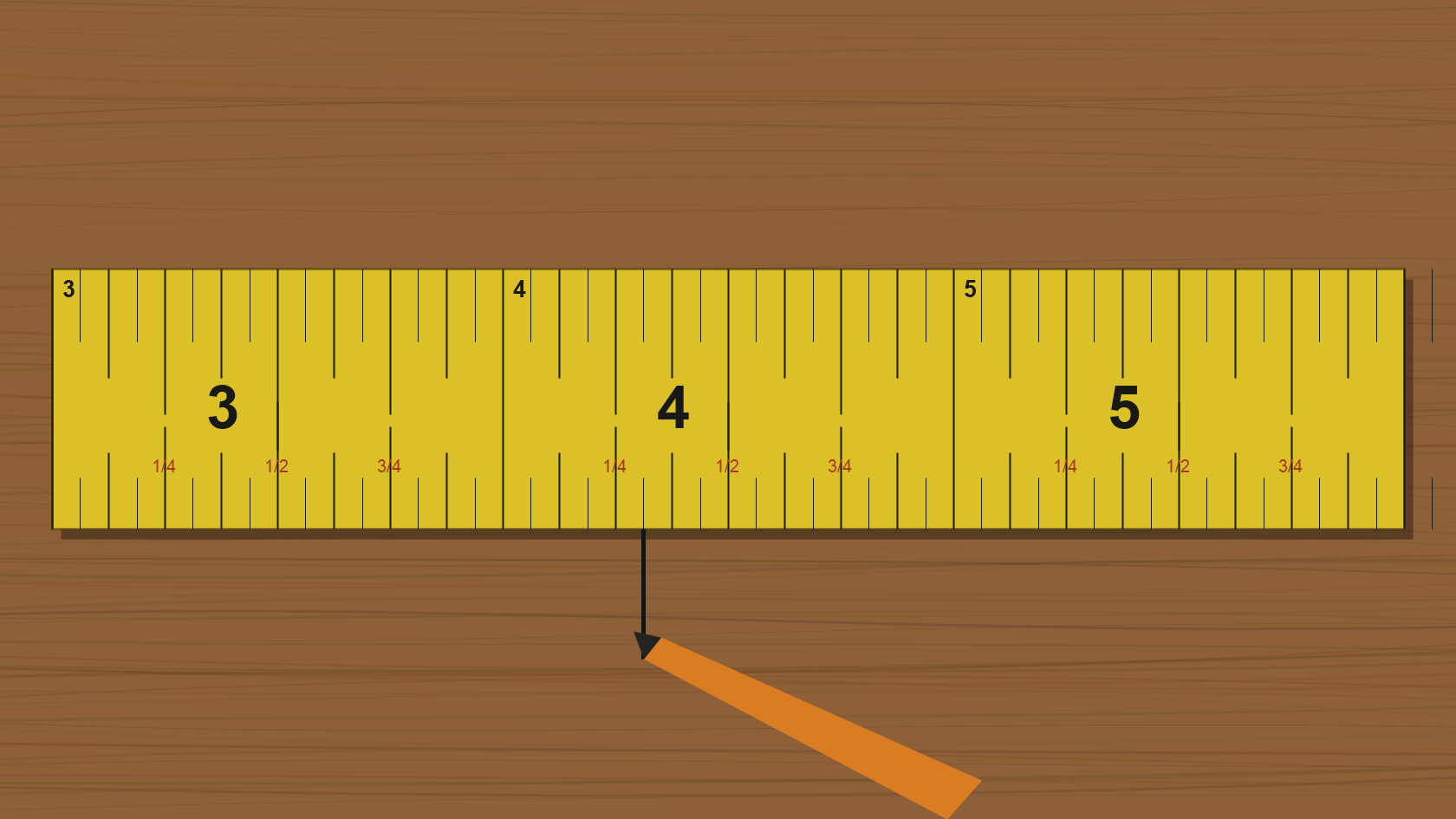
On an imperial tape, the inch mark is the big one. The half-inch mark splits the inch in two. Quarter marks split it into four. Eighths split it into eight. The shortest common marks are sixteenths. If you can count sixteenths, you can read almost any normal tape.
The trick is reducing fractions. Eight sixteenths is one half. Four sixteenths is one quarter. Six sixteenths is three eighths. Ten sixteenths is five eighths. You do not need to memorize every mark if you learn the pattern.
| Mark | How to spot it | Example after 7 inches |
|---|---|---|
| 1/2 | The longest mark between inch numbers. | 7 1/2 |
| 1/4 | The next-longest marks: one quarter and three quarters. | 7 1/4 or 7 3/4 |
| 1/8 | Shorter marks that split each quarter in half. | 7 1/8, 7 3/8, 7 5/8, 7 7/8 |
| 1/16 | The shortest common marks on many tapes. | 7 1/16, 7 5/16, 7 11/16 |
- Seat the hookPull against an edge or push inside a surface the same way every time.
- Read the inch firstSay the whole inch out loud, then count the fraction after it.
- Mark the waste sideThe pencil line has thickness. The saw kerf has thickness. Decide which side survives.
- Confirm repeatsFor multiple parts, use a stop, story stick, or direct transfer so the same number is not re-invented ten times.
How the fractions work
Between 5 and 6 inches, the first small sixteenth mark is 5 1/16. The second is 5 1/8 because 2/16 reduces to 1/8. The fourth is 5 1/4. The eighth is 5 1/2. Then the pattern mirrors toward 6 inches.
Say the measurement out loud as the whole inch plus the fraction: 7 and 3/8, 12 and 11/16, 24 and 5/8. Avoid decimal mental math unless the project is actually using decimals.
Use the hook correctly
Tape hooks move a tiny amount on purpose. That movement accounts for inside versus outside measurements: hooking over an edge versus pushing the hook against a surface. If the hook is bent, loose, or packed with debris, your readings move with it.
For fussy work, burn an inch: start your measurement at the 1-inch mark and subtract 1 inch from the final reading. This avoids trusting the hook when the hook is questionable.
Layout beats memory
When cutting repeated parts, use a stop block, story stick, or direct transfer instead of re-reading the tape every time. Measuring ten separate times creates ten chances to be a sixteenth off.
Mark with a V or crow foot if you need the exact point. Put the saw kerf on the waste side. A perfect measurement still fails if you cut away the line you meant to keep.
The mark is honest
- You read whole inch first, then fraction.
- The tape is straight and flat enough for the job.
- Repeated parts use stops or direct transfer.
Measure again
- The hook is bent and still trusted.
- You mark with a fat pencil and cut through the wrong side.
- The tape is twisted, bowed, or read at an angle.
Field note
The tape tells you a number. Layout decides whether that number survives the cut.