 By Chris Follin
SHOP SKILLS
How to use a multimeter
A multimeter is one of the most useful tools in the shop, but it punishes wrong setup. The meter has to be in the right jack, right mode, right range, and right safety category before the probes touch anything.
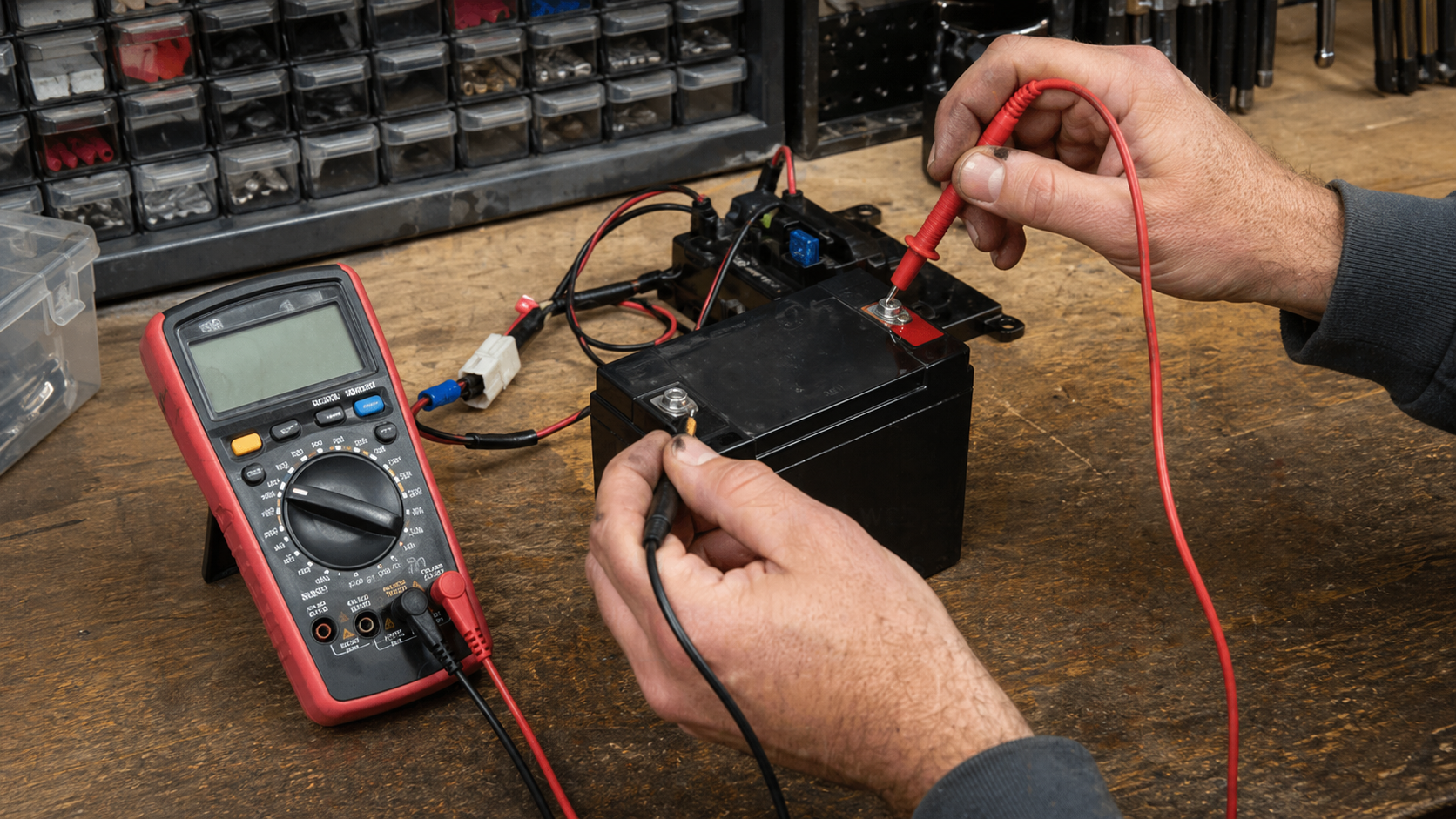
Make the setup check automatic
A multimeter is one of those tools that looks harmless until it is set up for the wrong job. Voltage, current, resistance, and continuity are not just different labels on the dial. They change where the leads go, how the meter connects to the circuit, and whether the circuit should be live.
Make the ritual boring: black lead in COM, red lead in the correct jack, dial on the correct function, range high enough if the meter is manual, and meter rating appropriate for the circuit. Then probe deliberately.
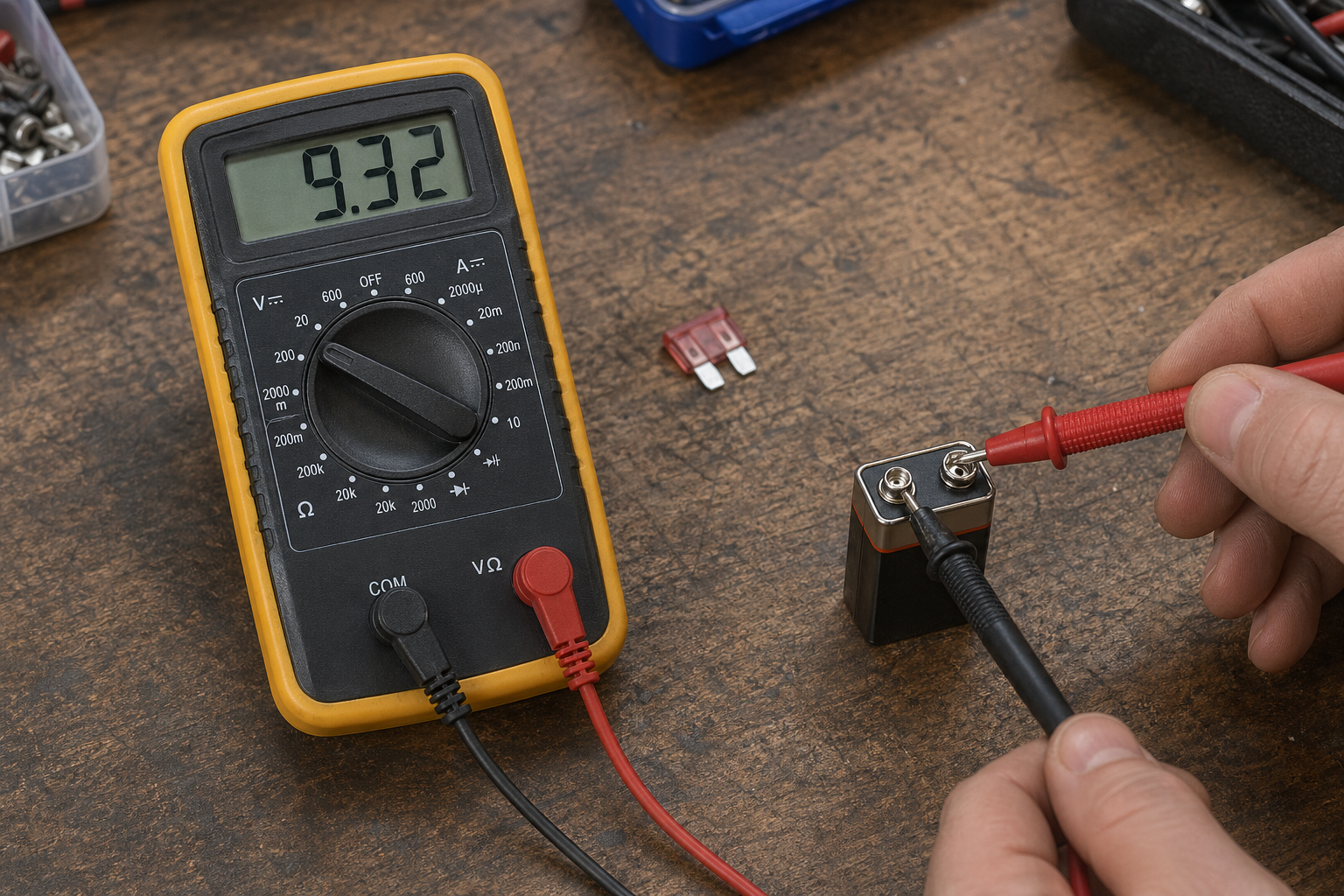
METER MISTAKES
Most bad readings start before the probes touch
The screen can only report what the meter was asked to measure. If the red lead is in the wrong jack, the dial is on the wrong function, or the circuit is energized when it should not be, the number is not the problem. The setup is.
| Symptom | Likely mistake | What to check |
|---|---|---|
| Voltage reads zero where power should exist | Wrong function, poor probe contact, blown meter fuse, or measuring the wrong reference point. | Confirm DC vs AC, lead jack, range, and a known-good source. |
| Continuity beeps in a circuit that should be open | Other connected parts are creating a path through the circuit. | Disconnect one side of the part before trusting the beep. |
| Resistance reading wanders | Dirty contacts, body contact through fingers, charged capacitors, or in-circuit paths. | Power off, discharge safely, isolate the part, and keep fingers off probe tips. |
| Meter fuse blows | Current mode used like voltage mode. | Move the lead back to V/ohm before any voltage check. |
| Check | Lead and dial setup | Power condition |
|---|---|---|
| DC voltage | Black in COM, red in V/ohm, dial on DC volts. | Circuit can be live; meter probes across the two points. |
| AC voltage | Black in COM, red in V/ohm, dial on AC volts and proper range/category. | Circuit can be live; use rated meter/leads and do not improvise around building power. |
| Continuity | Black in COM, red in V/ohm, dial on beep/continuity. | Power off. Isolate the part if other paths confuse the reading. |
| Current | Lead may move to amps jack; dial on amps or milliamps; meter goes in series. | Power may be present, but the circuit must be opened so current flows through the meter. |
Read the face of the meter
COM is the common black-lead jack. The V/ohm jack handles most voltage, resistance, continuity, diode, and low-current logic checks depending on the meter. The amps jack is special and should not be treated like the default home for the red lead.
If the meter has manual ranges, start above what you expect and step down. If it is auto-ranging, still choose the correct function: DC volts for batteries and vehicle work, AC volts for household-style power, ohms or continuity only on de-energized circuits.
Do the three useful beginner tests
For DC voltage, put the meter across the battery or circuit points: red to positive, black to negative or ground. A car battery check, small battery check, or 12V accessory check is a good first skill.
For continuity, turn power off and isolate the part if needed. Touch the probes across a fuse, switch, wire, or connection. A beep means a path exists; no beep means open circuit, bad contact, or too much resistance for the beep threshold.
For resistance, power must be off. Resistance readings in-circuit can be misleading because other paths may exist. If the number does not make sense, isolate the component before trusting it.
Respect ratings and unknown circuits
CAT ratings matter around building power, panels, motors, and distribution equipment. Use a meter and leads rated for the environment, not just the voltage number. A cheap meter that is fine on a AA battery is not automatically fine in a service panel.
Use one hand when appropriate, keep fingers behind probe guards, avoid wet work, and stop when you cannot identify what you are touching. For household wiring, panels, EV/high-voltage systems, and unknown high-energy circuits, get trained help instead of treating the meter like armor.
The meter is ready
- Leads are in COM and V/ohm before voltage checks.
- You verify DC versus AC before probing.
- Continuity and resistance are checked only with power off.
The meter is set up to bite you
- The red lead lives in the amps jack.
- You probe an outlet or battery while the meter is on current mode.
- You use an unrated meter on unknown building power.
Field note
The meter reading is the second result. The first result is whether the meter was set up correctly. If the setup is wrong, a precise-looking number is just a polished lie.