 By Chris Follin
TRAILER SKILLS
How to hook up a trailer the right way
A trailer hookup is not done when the coupler drops onto the ball. The connection, chains, wiring, breakaway cable, jack, load, tires, and walkaround all have to agree before the vehicle moves.
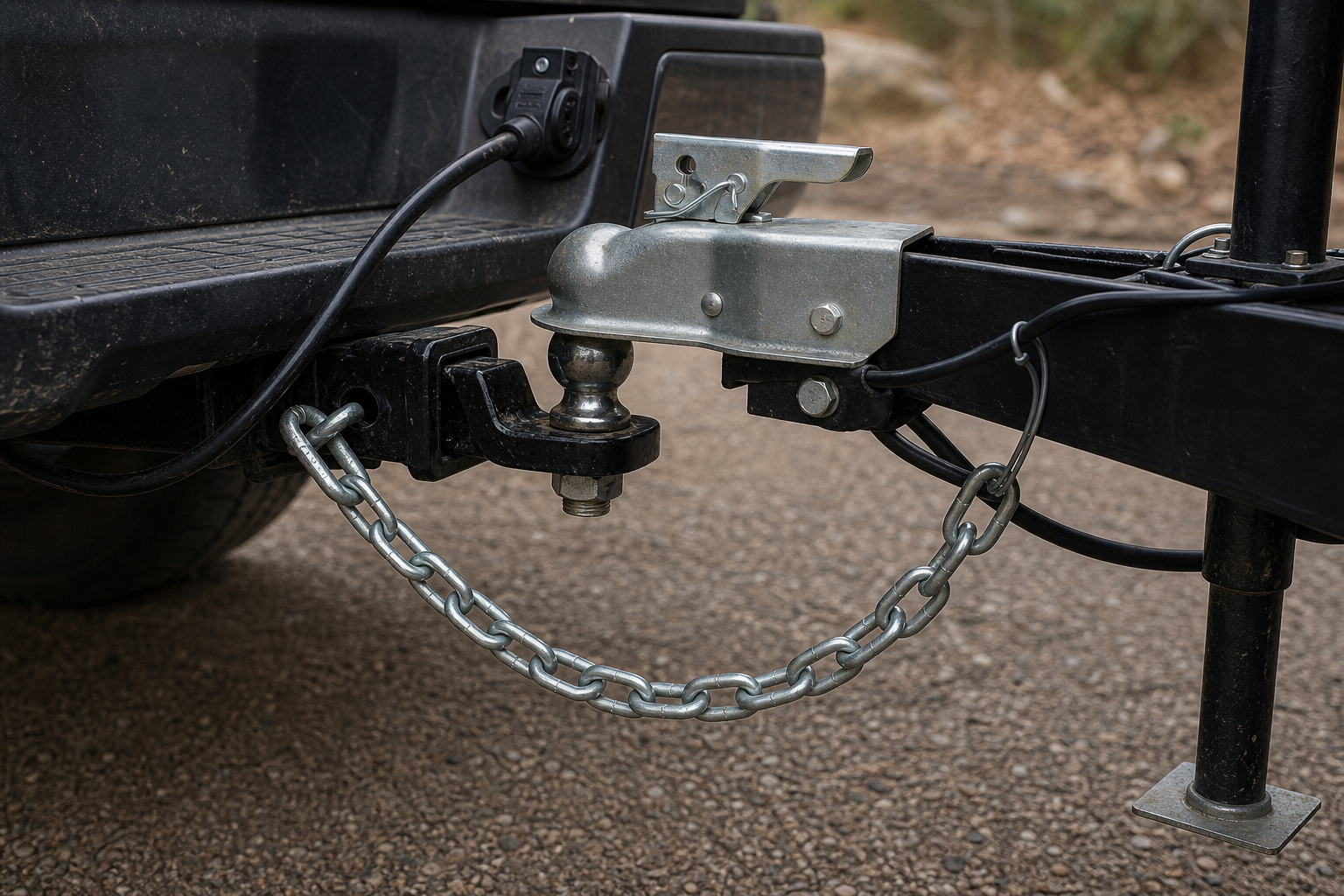
It is a system, not one click
The coupler is the primary connection. The safety chains are the backup if that primary connection fails. The breakaway cable, if equipped, is its own emergency brake trigger. Wiring tells everyone behind you what you are doing. None of those pieces replaces the others.
Distraction is the enemy. Use the same order every time and do not let conversation, hurry, or "I have done this before" skip the walkaround. Trailer mistakes often happen because one boring step was left half done.
HOOKUP FLOW
The order that catches missed steps
Use the same walkaround every time. Trailer mistakes are usually boring steps left half done.
- 1. MatchBall size, coupler, receiver, ratings, tire condition, and load.
- 2. Seat and lockCoupler fully down, latch closed, latch pinned, receiver pin clipped.
- 3. Backup systemsChains crossed under the tongue, breakaway cable separate, wiring plugged in.
- 4. Final walkJack up, chocks out, lights tested, doors/ramps/straps checked.
Chains and breakaway are not the same job
Safety chains catch the tongue if the coupler connection fails. A breakaway cable activates trailer brakes if the trailer separates. Do not wrap the breakaway cable into the chains like it is just extra chain slack.
HITCH CHECK
The five-second tests before you roll
These are the little checks that catch most bad trailer hookups before they become highway problems.
| Check | What you are looking for | Why it matters |
|---|---|---|
| Coupler lift test | Jack the tongue slightly or tug forward gently and confirm the coupler stays captured on the ball. | A latch can look closed while the coupler is sitting on top of the ball instead of around it. |
| Chain cradle | Left trailer chain to right truck point, right trailer chain to left truck point, with enough slack for a full turn. | If the coupler comes off, crossed chains help keep the tongue from dropping straight to the pavement. |
| Breakaway cable | Separate from the chains, clipped to the tow vehicle, not the removable ball mount. | It needs to pull the pin if the trailer truly separates, not get tangled in the backup chains. |
| Light test | Running lights, brake lights, left signal, right signal, and hazards. | Bad wiring turns every lane change and stop into a surprise for the person behind you. |
Before you lower the coupler
Check the ball size stamped on the coupler and the ball. Close is not good enough. Look at the receiver pin, ball mount, coupler, jack, chains, wiring, tires, and load before you commit.
Back the ball under the coupler slowly. Keep people out of the pinch zone between tow vehicle and trailer. Lower the coupler fully onto the ball, close the latch, then pin or lock it.
Chains, breakaway, and wiring
Cross the left chain to the right tow-vehicle attachment point and the right chain to the left. The crossed chains should form a cradle under the tongue. They need enough slack for turns but should not drag or bind.
Attach the breakaway cable to a solid tow-vehicle point separate from the safety chains if the trailer has brakes and a breakaway system. Plug in wiring and test lights before leaving.
The last walkaround
Look at the coupler latch again. Look at the receiver pin and clip. Look at chain slack. Look at the jack, stabilizers, doors, ramps, load straps, chocks, tires, and lights. Pull forward a few feet and stop if you need one more look.
Check again at the first stop. New noises, chain drag, light problems, loose straps, or a trailer riding wrong are all reasons to pull over.
Ready to roll slowly
- Coupler passes the lift/tug test.
- Chains are crossed and do not drag.
- Lights work before the trailer leaves the site.
Do not leave yet
- Latch has no pin or lock.
- Breakaway cable is wrapped into the safety chains.
- The jack wheel or foot is still down.
Field note
Hookup is done when the primary connection, backup connection, electrical connection, and walkaround all pass.