 By Chris Follin
CAMP HYGIENE
How to set up a hand-washing station at camp
A camp hand-washing station only works if it is easier than skipping it. Put water, soap, towel, and wastewater control where people already move: near the kitchen and along the bathroom-to-food path.
Put it where habits happen
Camp hygiene fails when it depends on motivation. People are tired, hungry, dusty, and distracted. A good hand-washing station removes the little excuses by putting water and soap directly in the flow of camp life.
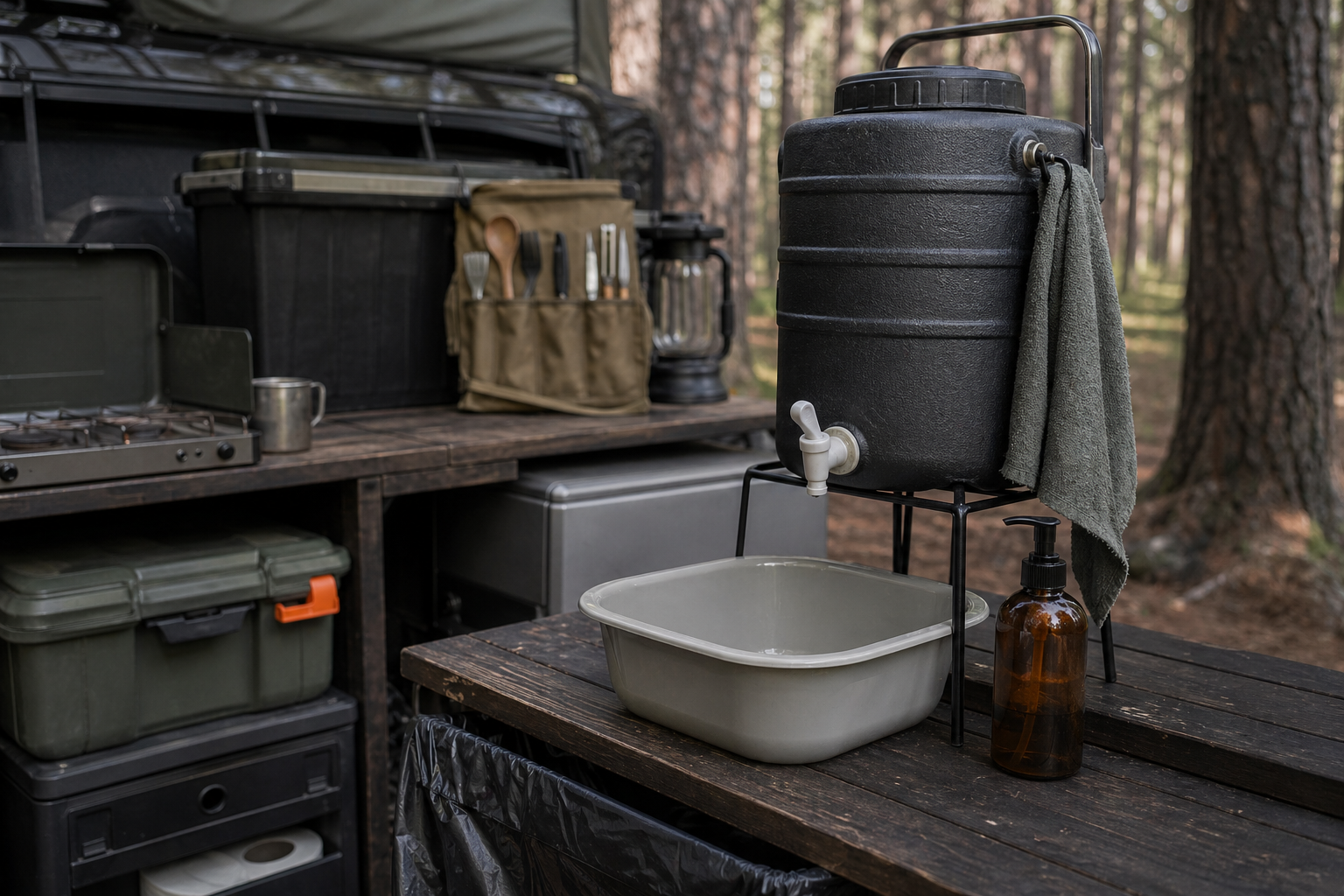
The station does not need to be elaborate. A jug with a spigot, a pump bottle or soap on a leash, a small towel, and a basin can do a lot. The important part is placement and repetition. If it is beside the food table, people use it. If it is buried in a bin, they do not.
STATION FLOW
Make clean hands the default
The station only works if it sits in the route people already take between bathroom, kitchen, cooler, and table.
- 1. Put it at the kitchen edgeClose enough to use before food, not directly where gray water splashes onto prep space.
- 2. Control the waterUse a spigot, foot pump, or small pour bottle so people can lather instead of dumping the jug.
- 3. Keep soap attachedClip, leash, or tray the soap so it does not migrate into a bin after one meal.
- 4. Decide where water goesCatch it in a basin at developed sites, or scatter/dispose of it by local rules away from water.
WHEN TO WASH
The moments that matter
Build the station in five minutes
Set a water jug on the edge of a table, tailgate, or stable bin. Put a basin below the spigot if the site needs wastewater control. Add soap, a towel, and hand sanitizer as a backup. Clip or tie the soap so it stays there.
If kids are around, make the station low enough to use without help. If the station is too high, too wobbly, or too precious, it becomes decoration.
Use it at the right moments
The useful moments are before cooking, before eating, after bathroom trips, after handling raw meat, after touching trash, and after messing with dirty water or dishes. Those are the points where a small hygiene habit prevents the most misery.
This is especially important around shared snacks. Chips, fruit, tortillas, and trail mix turn into hand-to-hand delivery systems if nobody washes up.
Plan the gray water
In a developed campground, use the provided sink or gray-water disposal if one exists. In a more primitive site, keep wash water away from streams and lakes, use small amounts of soap, strain food bits if there are any, and scatter or dispose of wastewater according to local rules.
Do not let a hand-washing station become a swamp under the kitchen. Move it, catch it, or scatter it properly before the area turns gross.
People will actually use it
- Soap is visible from the food table.
- The towel is dry enough to use.
- The wastewater plan does not create mud at your feet.
It exists only in theory
- Everyone uses sanitizer while hands are visibly dirty.
- The station is across camp from the kitchen.
- The soap disappears into a bin after the first meal.
Field note
Do not make clean hands a moral test. Make them convenient.