 By Chris Follin
CAMP KITCHEN
How to manage dishes and gray water at camp
Camp dishwashing is not glamorous, but it is one of the places where a campsite either stays pleasant or slowly turns into a sticky food-smell mess. The trick is scraping first, using less water, straining solids, and disposing of gray water correctly.
Scrape first, wash second
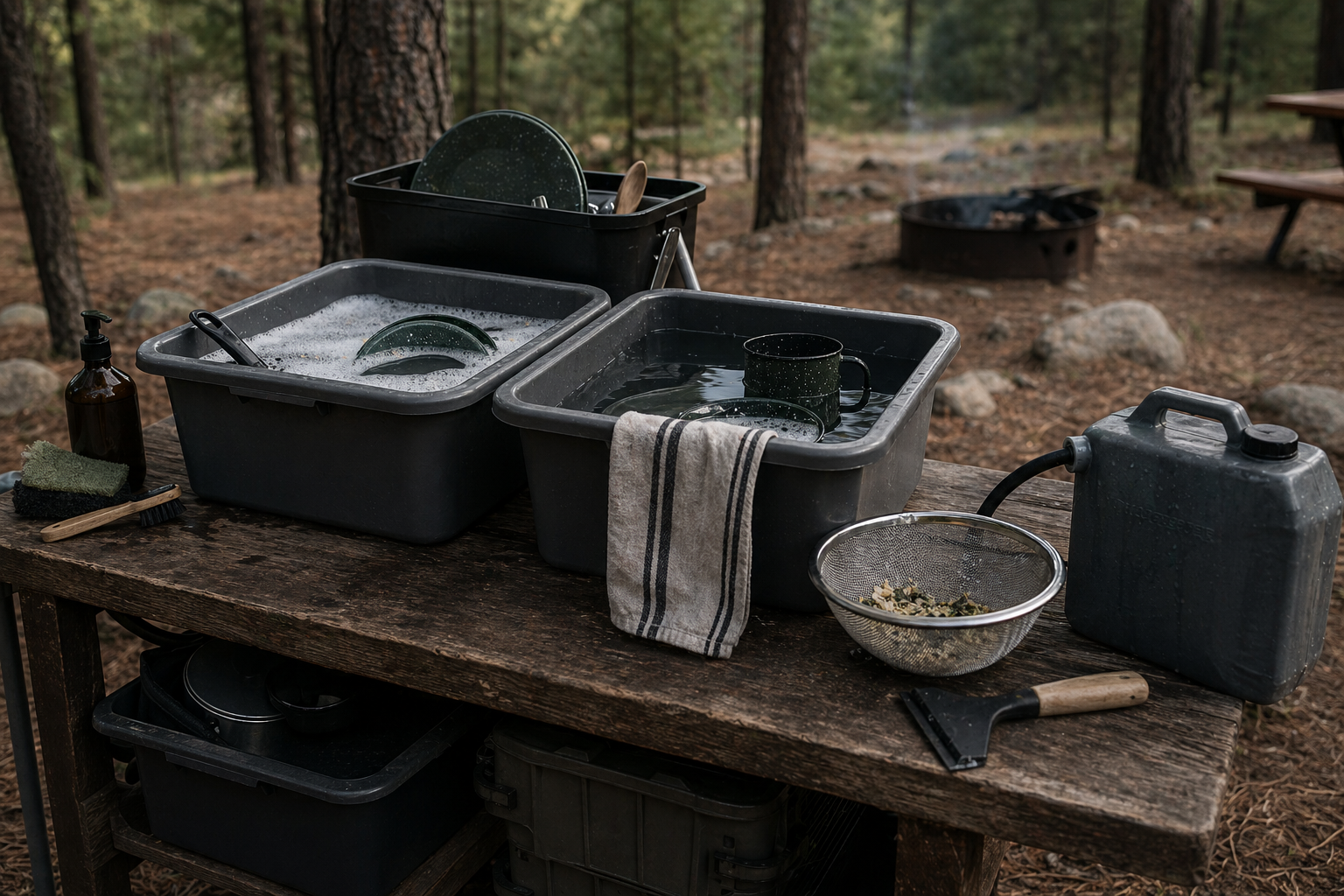
The easiest dishwater is the dishwater you never create. Scrape plates into trash, wipe greasy pans with a small paper towel if needed, and use hot water or a small amount of soap only after the food chunks are gone. Food solids in gray water are what attract animals and make camp smell old.
A good dish system can be simple: scrape, wash, rinse, dry, strain, dispose. Larger groups may use multiple tubs. For most car camping, one wash bin, one rinse bin, a small strainer, and a drying towel are enough if everyone scrapes first.
DISH LINE
The order that keeps camp from smelling like dinner
Dishwashing gets easy when food solids never reach the water in the first place.
- 1. ScrapeFood scraps go into trash. Grease gets wiped before water touches the pan.
- 2. WashSmall amount of hot water, tiny amount of soap, dirty-to-clean order.
- 3. RinseUse a second tub or rinse bottle so clean dishes do not sit in greasy water.
- 4. Strain and disposeCatch solids, pack them out, and handle gray water by site rules.
GRAY WATER
Developed campground vs. dispersed camp
| Place | Best disposal | Do not |
|---|---|---|
| Campground with sink or gray-water drain | Use the provided drain after straining food solids into trash. | Dump dishwater behind the site because it feels easier. |
| Dispersed camp where scattering is allowed | Wash well away from water, strain solids, use little soap, and scatter broadly. | Create one greasy puddle near the kitchen or sleeping area. |
| Sensitive area or rules require pack-out | Carry a sealable gray-water container and dispose later. | Assume biodegradable soap makes creek dumping acceptable. |
Use a simple dish line
Start with a scraper or spatula and a trash bag. Then use a wash bin with a little hot water and soap, followed by a rinse bin or rinse bottle. Put clean dishes on a towel or rack where dust and food prep will not hit them.
If you cooked something greasy, wipe the pan first. Grease spreads through wash water, sticks to everything, and makes the disposal problem worse. A tiny bit of paper towel packed into trash can save a lot of water.
Strain and pack out solids
Before disposing of gray water, strain it through a fine mesh strainer, bandana, or dedicated screen. The captured food bits go in the trash, not on the ground. Those little scraps are exactly what teach animals to inspect campsites.
This matters even when the food bits seem tiny. Smell carries. Concentrated food water beside camp is an invitation to insects, rodents, and larger animals depending on where you are.
Dispose by the place you are in
In developed campgrounds, use dishwashing sinks, utility sinks, gray-water drains, or host guidance if provided. Do not assume the bushes behind the site are the official solution.
In backcountry or dispersed settings, Leave No Trace guidance is to wash away from water sources, use small amounts of soap, strain wastewater, and scatter it broadly where local rules allow. Some areas require packing it out or using a specific receptacle, so local rules win.
The cleanup is controlled
- Plates are scraped before the bin fills.
- The water is strained before disposal.
- Food scraps and greasy towels go into sealed trash.
You are making an animal problem
- Dishwater is dumped in one puddle beside camp.
- Soap goes directly into a creek or lake.
- Food bits are left in the fire ring, bushes, or gravel pad.
Field note
The cleaner you are before water touches the dishes, the easier and less gross everything gets.