 By Chris Follin
WEATHER
How to camp when the weather turns
Bad weather does not always ruin camp. Bad preparation does. Set up so rain drains away, wind has less to grab, dry gear stays dry, and you know when conditions have crossed from inconvenient to unsafe.
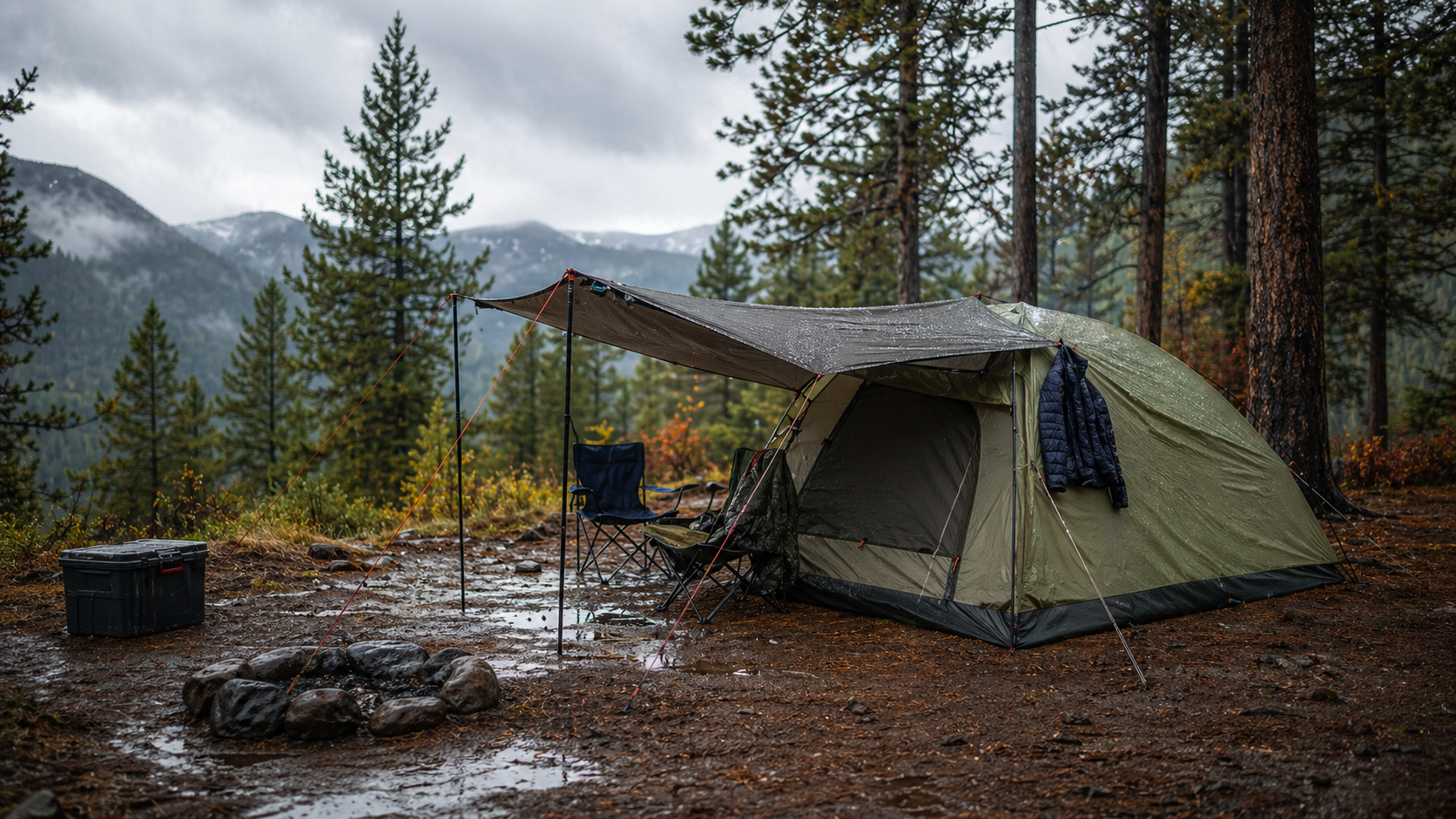
Set up for the weather path
Rain wants to flow downhill. Wind wants to grab flat fabric. Cold wants to find damp clothes. Your setup should account for all three before they become urgent. A good weather camp is less about heroic gear and more about angle, tension, storage, and timing.
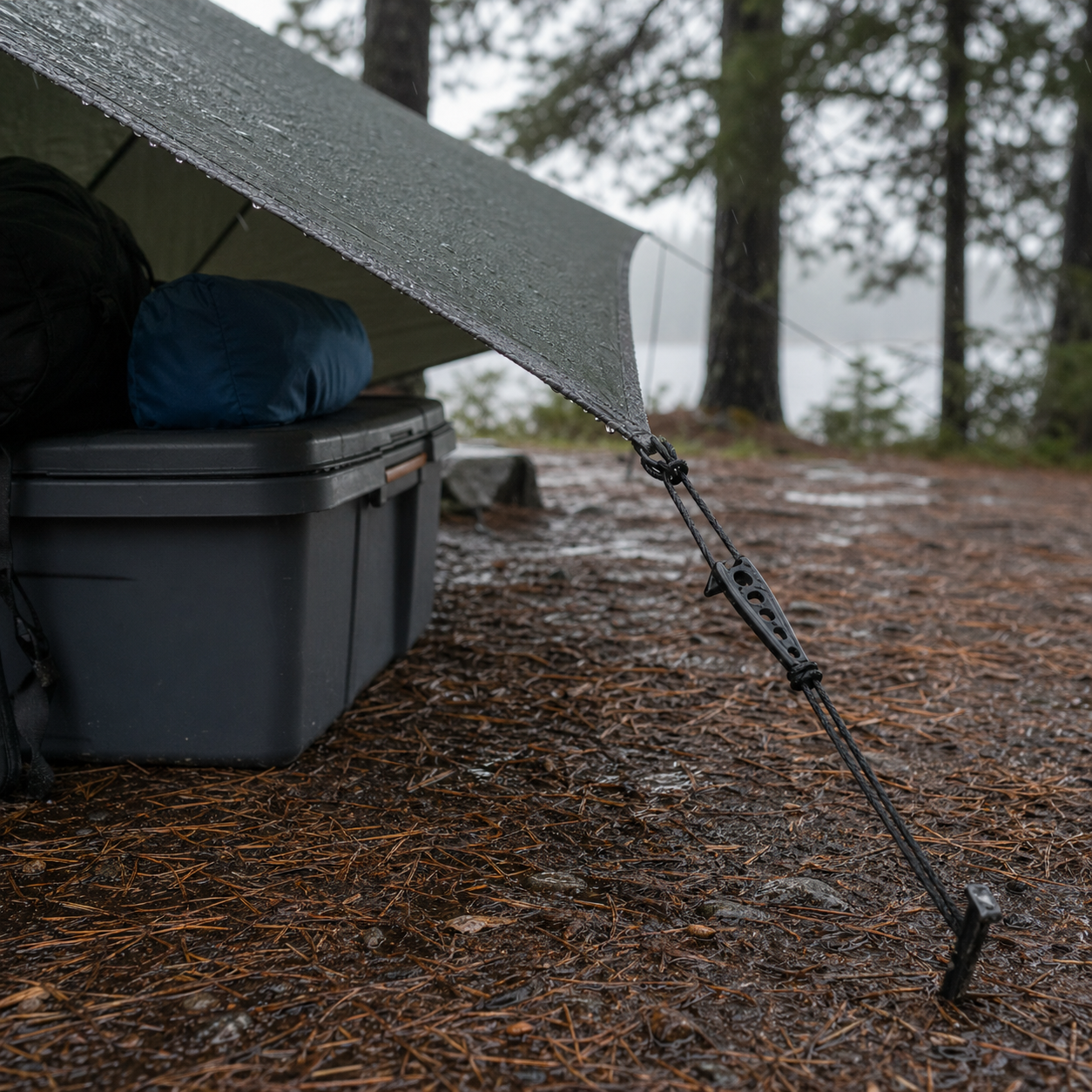
WEATHER TRIAGE
Handle the threat that is actually coming
Rain, wind, cold, heat, and lightning all demand different camp moves. Do not solve the wrong problem.
| Weather | Move first | Quit point |
|---|---|---|
| Rain | Move to high ground, tighten fly, tuck footprint, close bins, protect shoes. | Water is running through camp or under the tent. |
| Wind | Drop awnings, add guylines, lower tarp profile, put loose gear away. | Shelter is deforming, poles are bending, or fabric is snapping hard. |
| Cold | Dry layers, warmer pad, hot drink plan, breakfast staged, batteries protected. | Gear is not rated for the overnight low or people cannot get warm. |
| Lightning or flood risk | Stop cooking/setup distractions and reassess location. | Exposed ridge, wash, drainage, or storm path makes staying dumb. |
Leaving is a skill
If the road, drainage, wind, lightning, wildfire smoke, or temperature moves past your gear and judgment, leaving is not failure. It is the decision that lets you camp again later.
Before weather hits
- Stake and tension the tent while conditions are still calm.
- Move chairs, shoes, towels, and loose gear under cover before they get wet.
- Close bins and coolers; a cracked lid becomes a water collector.
- Put sleep clothes and insulation inside the tent while they are still dry.
- Choose a cooking plan that works if wind or rain arrives at dinner.
- Know the route out before roads get muddy, icy, flooded, or dark.
If rain is coming
- Make sure every shelter surface has a slope. Flat tarps pool water and become heavy fast.
- Keep the tent footprint tucked under the tent body so it does not catch rain and funnel it underneath.
- Avoid touching wet tent walls from inside.
- Create a wet-entry routine: shoes, jacket, towel, and door discipline.
- Move food and trash into a secure, dry, animal-safe place.
If wind is coming
Drop tall awnings, tighten guylines, rotate vehicles into useful wind blocks where practical, and simplify cooking. Wind turns loose items into chores and tall fabric into stress. If the shelter is snapping constantly, lower it or take it down before it damages itself.
Know when to leave
Leaving is a valid outdoor skill. Lightning, flash flood risk, extreme wind, unsafe roads, wildfire smoke, or temperatures beyond your gear are not character tests. The point is to come back with a better plan.
The setup still has options
- Water runs away from the tent and kitchen.
- Dry sleep clothes are already protected.
- The stove can be used safely or the meal plan can simplify.
- You know what condition would make you leave.
Weather is now in charge
- The tarp is flat and collecting water.
- The tent sits in a low spot or drainage line.
- Loose gear is scattered when wind starts.
- You are staying because leaving feels annoying, not because staying is safe.
Field note
Weather camping is about preserving options. If your setup gives you no dry place, no safe cooking plan, and no clean exit, it is not a setup. It is a bet.