 By Chris Follin
SETUP
How to set up camp fast
Fast camp setup is not frantic. It is sequencing. You make the site functional first, then comfortable, then nice. The mistake is unloading everything into one pile and calling that progress.
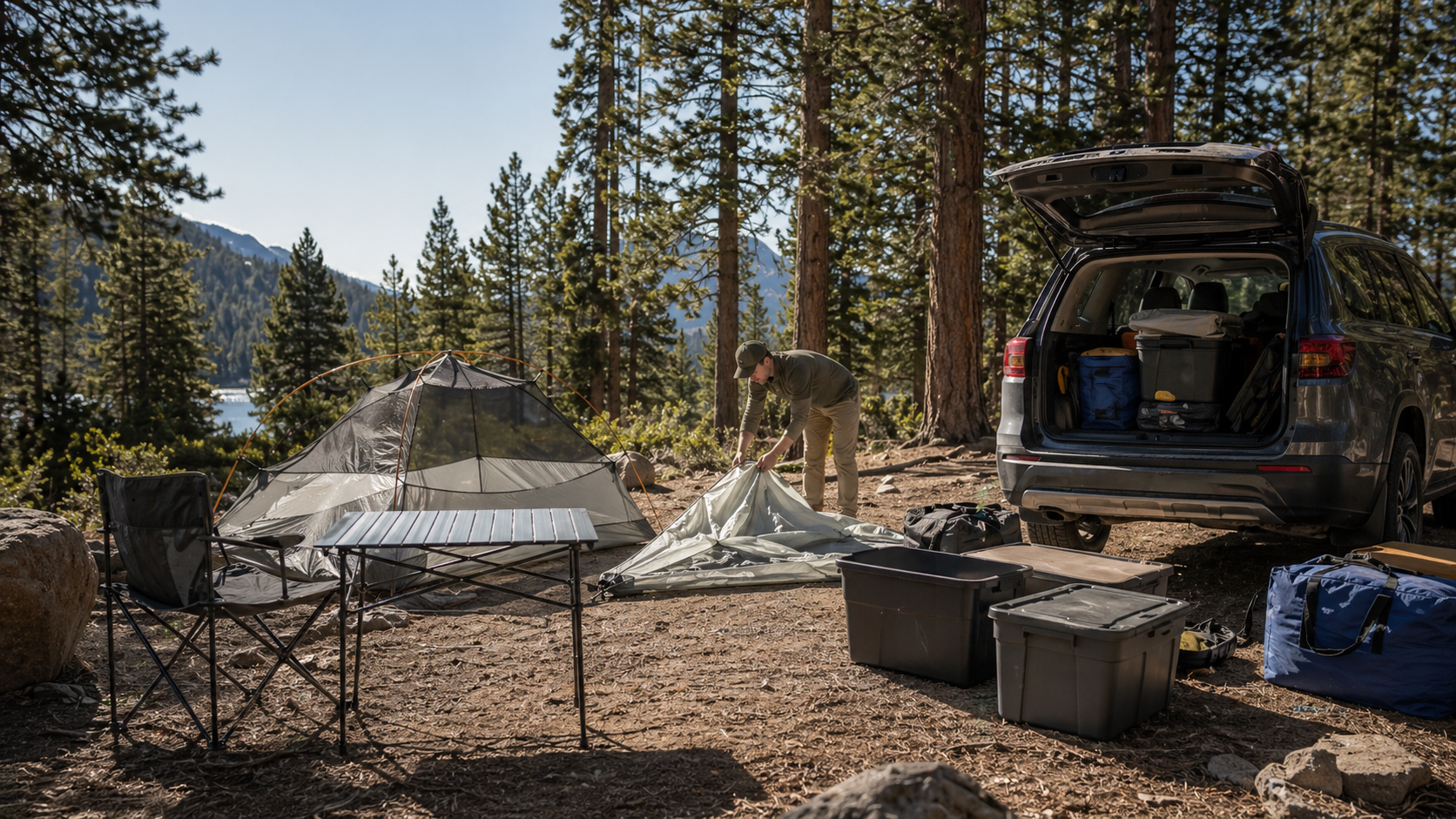
Fast setup is a decision order
Fast setup is mostly about avoiding rework. Every time you move the table, shift the tent, relocate the stove, or search through bins, you pay for not making a decision early. A clean setup order keeps the site from turning into a yard sale.
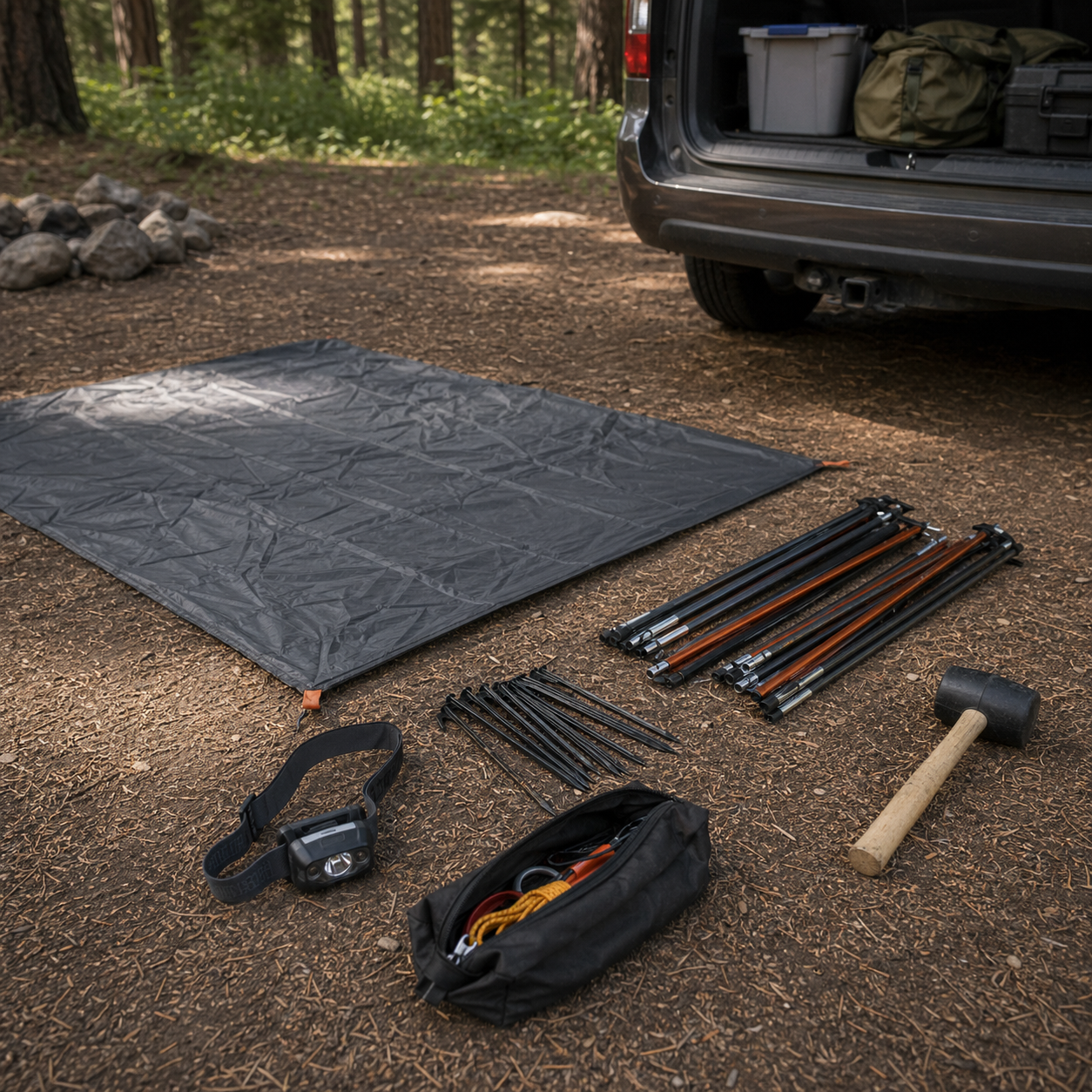
ARRIVAL FLOW
Functional first, comfortable second
Fast setup is just fewer bad decisions in the first twenty minutes.
- 1. Walk the sitePick tent, kitchen, chairs, fire, vehicle, and night path before unloading.
- 2. Shelter and sleepSet tent, pad, bag, and rain plan before light or weather gets worse.
- 3. Kitchen coreWater, stove, cooler, trash, hand wash, and dish plan land together.
- 4. Light and comfortHeadlamps, lantern, chairs, table extras, and personal bags after the basics work.
LATE ARRIVAL
Do less, but do the right less
The setup order I trust
- Walk the site with nothing in your hands. Pick the tent door direction, kitchen zone, chair zone, and vehicle position.
- Move the vehicle once if needed, then stop using it as a moving puzzle piece.
- Set the tent footprint and shelter. Stake corners before you inflate pads or decorate the interior.
- Build the kitchen enough to make food: table, stove, fuel, water, trash, hand sanitizer, and a landing spot for cookware.
- Move sleep gear straight into the tent: pad, bag, pillow, sleep clothes, headlamp, and warm layer.
- Set lights before dark. Headlamps are mandatory; lanterns and string lights are just workflow helpers.
- Finish comfort last: chairs, side tables, rugs, games, and nice-to-have stuff.
If you arrive late
- Shrink the plan. Build only what makes the night work: tent, pad, bag, water, simple food, one light, and trash. Do not open every bin. Do not build the full kitchen unless you actually need it. Morning is better for refinements.
If weather is coming
Shelter and loose gear move up the priority list. Stake before wind, put dry sleep items inside early, close bins, and make sure water runs away from camp instead of under the tent.
Camp is landing cleanly
- The tent, kitchen, and trash zones are obvious.
- One person can find water, light, and toilet items without asking.
- The vehicle is not blocking the best living area.
- The table is usable, not buried under random unpacked gear.
You are building rework
- Chairs are out before the tent spot is chosen.
- Bins are open everywhere with no zone finished.
- The kitchen is directly in the main walkway.
- Lighting is still unhandled after sunset.
Field note
Make camp functional before you make it cute. Comfort lands better when the basics are already handled.