 By Chris Follin
SHELTER SKILLS
How to pitch a tarp in wind
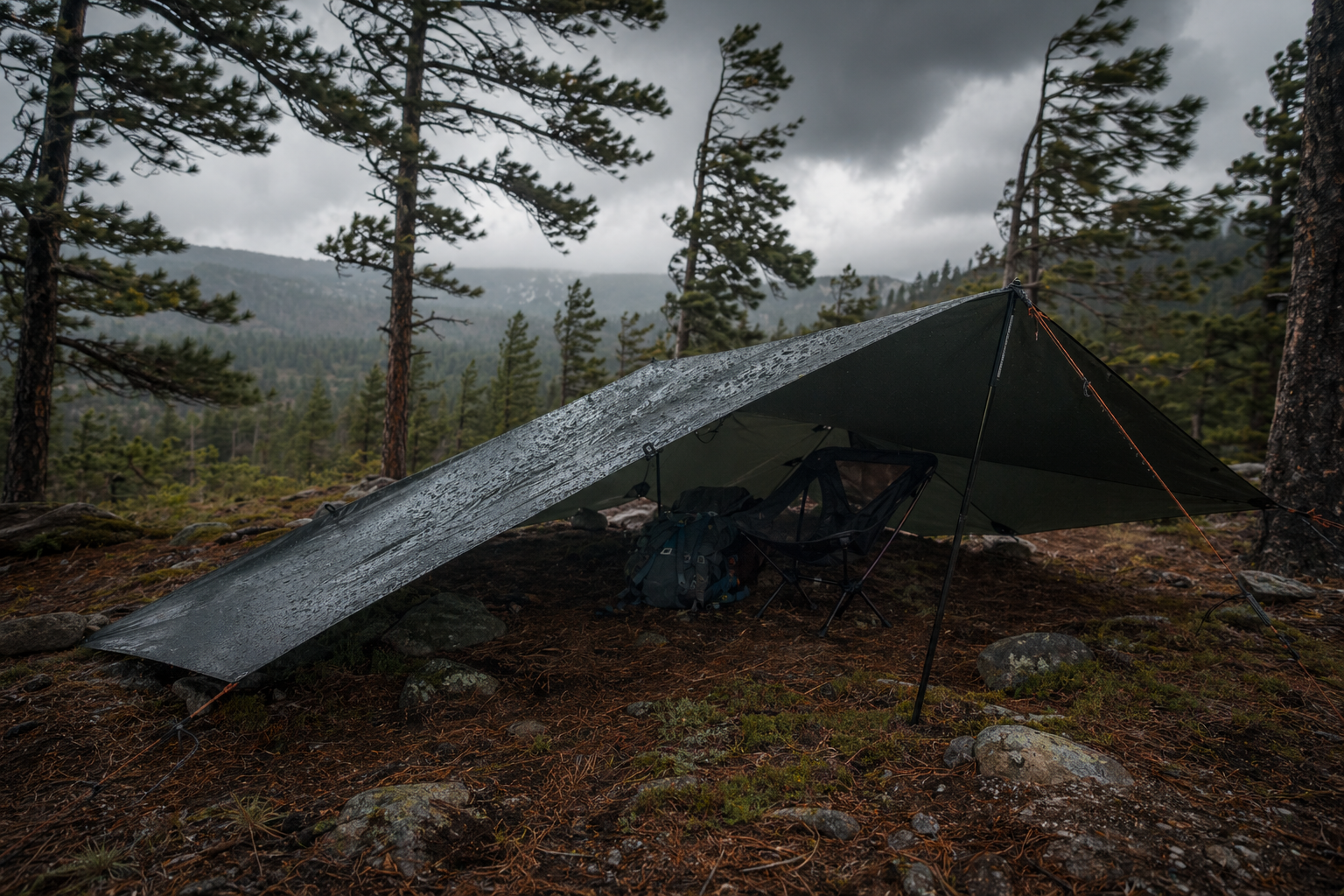
A windy tarp pitch is not about clever knots first. It is about making less sail, giving gusts a cleaner path over the fabric, using the strongest anchors on the loaded side, and knowing when a tarp should come down before it damages itself.

Start by making the tarp smaller to the wind
The higher and flatter the tarp is, the more leverage wind gets. A good windy pitch has a low profile, a clean slope, and a windward side that gusts press down instead of peeling up. Trees help, but only if the rope angle and fabric angle make sense.
| Pitch | Use it when | Watch out for |
|---|---|---|
| Low A-frame | Wind is steady and you need a reliable dry lane. | Too much height at the ridge or loose side panels that slap all night. |
| Lean-to | Wind has one clear direction and you want a protected work side. | The open side can become useless if wind shifts or rain blows sideways. |
| Low porch | Conditions are mild and you need shade more than storm protection. | It becomes a sail fast. Lower it before gusts make the decision for you. |
| No tarp | Gusts are shifting, anchors are bad, or the pitch keeps snapping. | Sometimes the best tarp setup is packed away before it damages itself. |
- Watch the windGive it a minute. Find the loaded side before fabric is flapping in your face.
- Anchor windward cornersPut the best stakes, rocks, or tree ties on the side that gusts will try to lift.
- Tension the ridgelineBuild the spine, then pull corners into shape. Do not chase a sagging tarp one corner at a time.
- Lower or remove itIf it snaps, walks stakes, or bends poles, change the pitch before gear gets wrecked.
Pick the pitch before the knot
- Use an A-frame or lean-to shape when the wind has a clear direction.
- Avoid broad flat porch pitches unless conditions are calm.
- Point an edge or a slope into the wind instead of presenting a flat wall of fabric.
- Keep poles shorter than your optimism wants them to be.
- Leave yourself a dry working area, but do not chase standing room if wind is the problem.
Anchor the loaded side first
- Stake or tie the windward corners first so the tarp cannot lift while you work.
- Drive stakes low and angled away from the tarp, not straight down beside the corner.
- If soil is loose, use longer stakes, rocks, logs, or buried deadman anchors.
- After the windward side is stable, tension the ridgeline, then bring the leeward corners into shape.
Tension without tearing gear
A tarp should be firm, not tortured. Overtensioned fabric can pull grommets, bend poles, and make stakes fail faster. If you need extreme tension to stop flapping, the shape is probably wrong. Lower it, change the angle, or remove a panel from the wind.
When to take it down
If the tarp is snapping violently, stakes are walking, poles are bowing, or gusts are shifting direction, taking it down is not losing. It is protecting gear and keeping camp safer.
The tarp can stay up
- The tarp hums quietly instead of snapping.
- Water can run off without pooling.
- A gust tightens the pitch instead of flipping an edge.
- The strongest anchors are on the loaded side.
Drop it before it tears
- A flat panel faces straight into wind.
- The tarp belly sags between supports.
- Stakes creep out every few minutes.
- The pitch only works while someone is holding a line.
Field note
I would rather have a smaller dry zone that stays up than a giant living room that spends the night trying to leave.