 By Chris Follin
FOOD SKILLS
How to keep a cooler cold longer
A cooler is not magic. It is an insulated box trying to protect cold mass from warm air. The more you pre-chill, pack tight, separate drinks, and stop opening it for no reason, the longer it works.
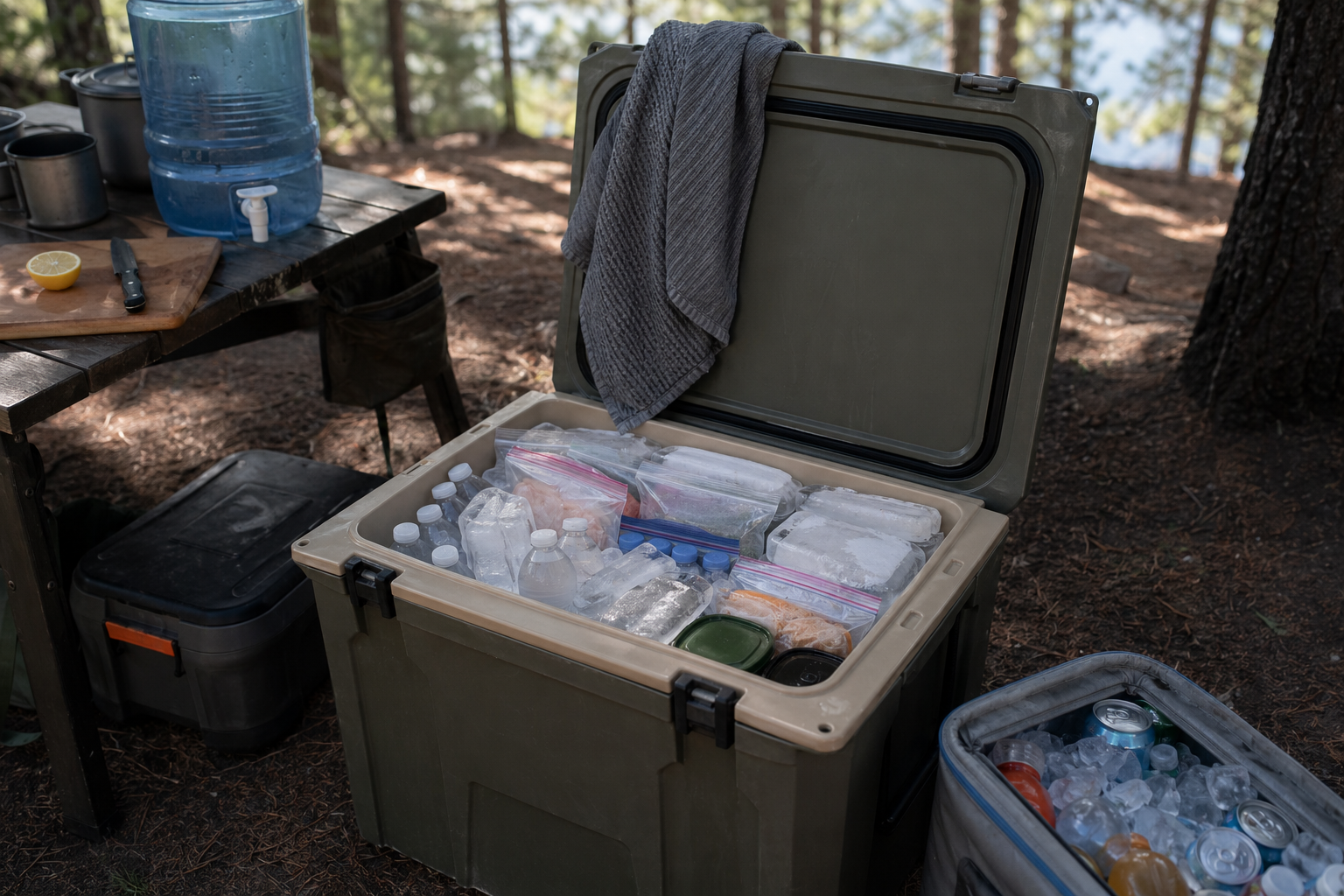
Pack cold, not hopeful
The biggest cooler mistake is using ice to chill warm food. Pre-chill the cooler if you can, refrigerate or freeze food before packing, and use frozen water bottles or block ice as cold mass. Cubes are useful, but they melt faster and create more loose water.
The second mistake is browsing. Every long cooler opening trades cold air for warm air. Know what you are grabbing before you lift the lid, and stage meals by day so you are not digging for breakfast under tomorrow night's dinner.
COOLER MAP
Pack by risk and day
The safest cooler is organized enough that nobody has to dig through raw meat to find lunch.
| Layer | What goes there | Why |
|---|---|---|
| Bottom | Block ice, frozen bottles, frozen meals, last-day food. | Cold mass lasts longer low in the cooler. |
| Low sealed zone | Raw meat in leakproof bags or containers. | Leaks should not drip onto ready-to-eat food. |
| Middle | Meal containers, dairy, eggs, prepped ingredients. | Protected from crushing and still cold. |
| Top | First meal, snacks that need chilling, thermometer, daily grab bag. | Reduces browsing with the lid open. |
Forty degrees is the line
Perishable food belongs at 40 F or colder. A cooler thermometer takes the guesswork out of it. If the cooler has been warm, the ice is gone, and meat or dairy has been drifting in the danger zone, switch to shelf-stable food instead of trying to win an argument with bacteria.
Pack it in layers
Put block ice or frozen bottles on the bottom, then the food you will use later in the trip, then the first-day food near the top. If raw meat is coming, seal it twice and keep it below ready-to-eat food.
Fill empty air space with ice packs, frozen bottles, or a folded towel. Air space warms fast. A full cooler with cold mass lasts longer than a half-empty cooler with a bag of cubes rattling around.
Separate drinks from food
The drink cooler is the one people abuse. It gets opened for water, seltzer, snacks, and the slow stare into cold air. That is fine if it is separate. Let the drink cooler take the abuse and keep the food cooler quiet.
If you only have one cooler, keep the daily drinks in a small soft cooler or pull them into a shaded bag each morning. Anything that reduces lid openings helps.
Know when food is done
If the ice is gone, the cooler is warm, and perishable food has been sitting above 40 F, do not turn dinner into a science experiment. Dry goods, canned food, and shelf-stable backup meals exist for exactly this moment.
A cheap cooler thermometer makes this less emotional. It tells you whether you are still in the safe zone instead of making you judge chicken by wishful thinking.
The cooler is doing its job
- Food goes in already cold or frozen.
- The lid opens for seconds, not minutes.
- Raw meat is sealed, low, and physically separated.
The food plan is warming up
- Warm groceries are packed at the trailhead.
- Everyone uses the food cooler as the drink cooler.
- Meltwater smells like marinade or meat packaging.
Field note
The cooler is a food-safety tool first and a convenience box second.