 By Chris Follin
WATER SKILLS
How to filter water without making yourself sick
Filtering water is not just squeezing creek water through a gadget. It is choosing the least-bad source, keeping dirty water away from clean containers, and knowing when a filter is enough, when you need disinfection too, and when the smarter move is to carry water from somewhere else.
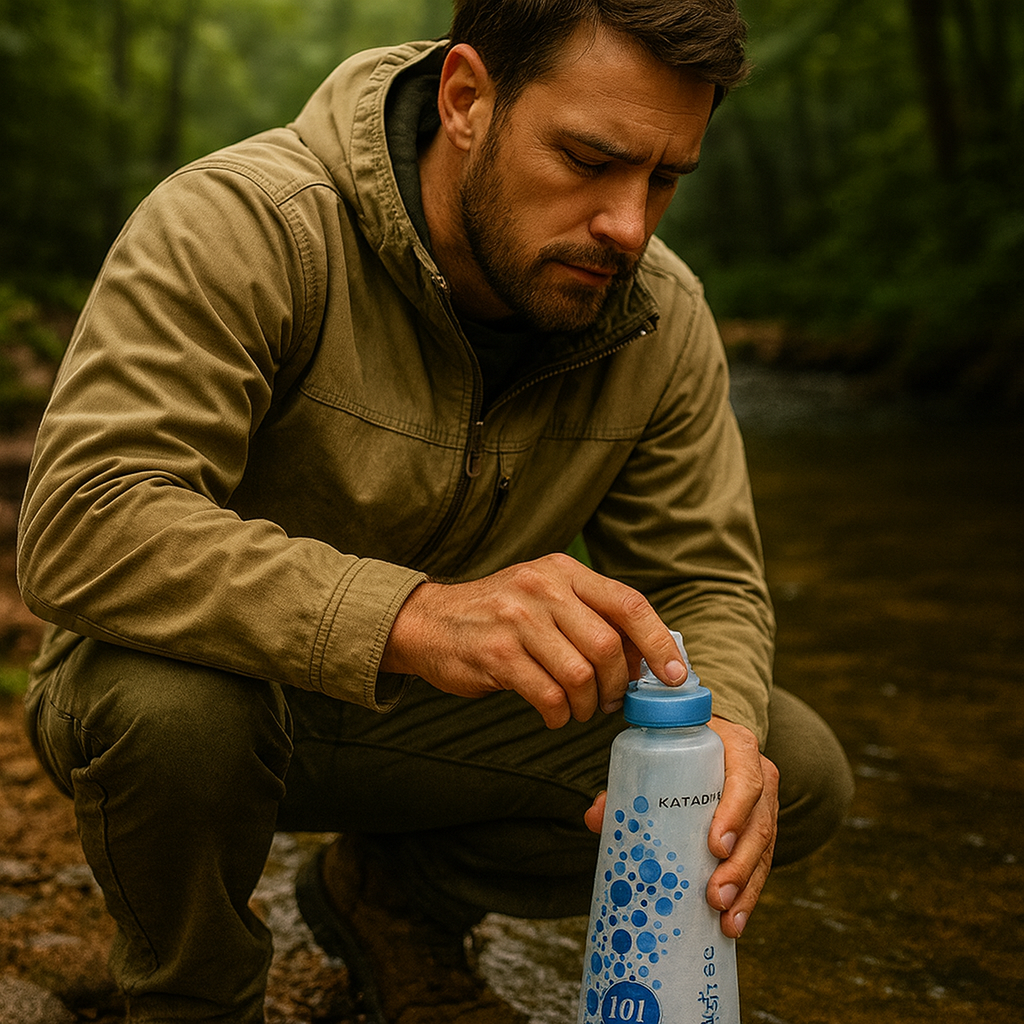
Clean water is a process
A squeeze filter, gravity filter, or pump can be excellent, but the filter is only one part of the system. You still need a dirty container, a clean container, clean handling, and a backup if the filter clogs, freezes, cracks, or gets dropped in the mud.
Think in two worlds: dirty side and clean side. Dirty bags, creek scoops, and untreated bottle threads stay in the dirty world. Clean bottle mouths, filter outlets, caps, and drinking reservoirs stay in the clean world. The whole job is keeping those worlds from touching.
TREATMENT CHOICE
Pick the method for the problem
The mistake is treating every water source like the same creek. The source, trip type, and backup plan should decide the method.
| Situation | Good move | Watch out |
|---|---|---|
| Clear mountain creek with little human impact | Use a maintained filter rated for bacteria/protozoa, then protect the clean side. | Do not dunk clean bottle threads or let the outlet touch dirty hands. |
| Silty or muddy water | Let it settle first, prefilter debris through cloth or a coffee filter, then treat the clearer top water. | Forcing grit through a filter clogs it fast and can damage some systems. |
| Questionable source near people, flooding, sewage, or poor sanitation | Boil when practical, or filter then disinfect if your setup supports that. | Many common backpacking filters are not virus purifiers. |
| Water is clear but virus risk is real | Use a purifier, boil, UV on clear water, or filter plus a chemical disinfectant. | A bacteria/protozoa filter alone is the wrong tool for viruses. |
| Chemical, fuel, harmful algae bloom, agricultural, or mining runoff concern | Find another source or carry water. | Boiling, chlorine, iodine, and normal camping filters do not make every chemical or toxin safe. |
The clean-side rule
Treated water is only treated until dirty hands, dirty bottle threads, a dirty cap, or the dirty end of the filter touches it. Most camp water mistakes are cross-contamination mistakes, not filter-brand mistakes.
Choose better water before filtering
Filtering muddy water is harder on the filter and slower for everyone. If the only source is silty, let it settle in a dirty container first, then filter the clearer water from the top. A bandana, paper towel, coffee filter, or cloth can keep big debris out, but prefiltering is not treatment by itself.
Avoid collecting directly below campsites, livestock areas, heavy trail crossings, obvious feces, dead animals, fuel slicks, floodwater, mine drainage, or stagnant pools with algae scum. Treatment helps with germs; it does not make every chemical or toxic source magically safe.
Know filter versus purifier
A typical backpacking filter may remove bacteria and protozoa, including Giardia and Cryptosporidium, when it is the right rating and used correctly. The Katadyn BeFree, for example, is a 0.1 micron hollow-fiber filter that Katadyn says removes bacteria, cysts, and sediment. That is useful, but it is not the same claim as virus purification.
Viruses are smaller, and many common filters are not designed for them. CDC guidance treats boiling as a strong simple option for bacteria, viruses, and protozoa. If boiling is not practical and water safety is uncertain, the CDC's next-best broad approach is to filter and then disinfect.
BOIL / FILTER / DISINFECT
Use the backup for the actual failure
The backup is not always another filter. Sometimes the right backup is fuel for boiling, chlorine dioxide, UV for clear water, or simply enough carried water to skip a bad source.
- Boil when broad coverage mattersCDC and EPA guidance use a rolling boil for 1 minute, or 3 minutes above 6,500 feet, then let the water cool in a clean container.
- Filter then disinfect when boiling is not realisticFiltering first can reduce particles and parasites; disinfecting after filtering helps cover bacteria and viruses depending on the product and contact time.
- Use UV only in clear waterCloudy water and shadowed particles can make UV treatment less reliable. Prefilter or settle turbid water first.
- Do not treat chemical water as a normal camp problemFuel, heavy metals, agricultural runoff, salt water, and harmful algae toxins need source avoidance or specialized treatment, not wishful filtering.
Protect the filter itself
Hollow-fiber filters can be damaged by freezing after they are wet. Sawyer says there is no definitive field test for freeze damage after initial wetting and recommends replacing a filter if you suspect it froze. Katadyn's BeFree manual also warns not to use the BeFree in freezing conditions because a frozen membrane can compromise the filter.
In cold weather, keep a wet filter in a pocket during the day and in your sleeping bag at night. Backflush, swish, or clean it the way that specific manufacturer recommends before flow gets miserable. Do not force dirty water backward through the clean side, and do not use another brand's aggressive backflush method on a filter that is not built for it.
Label dirty bags clearly. Use different caps if possible. Keep the filter outlet off the ground. Wash or sanitize hands before handling clean containers, especially after bathroom trips, raw food, or dish cleanup.
Clean side is protected
- Dirty and clean containers are visually distinct.
- The filter outlet never touches dirty water or dirty hands.
- You know whether your tool is a filter, purifier, disinfectant, or combination method.
- You have tablets, fuel for boiling, UV, or another backup.
You just lost the safety margin
- Clean bottle threads get dunked in the source.
- A wet filter freezes overnight and nobody knows if it is damaged.
- You assume a basic filter removes chemicals, fuel, algae toxins, or all viruses.
- You use chemical drops in muddy water without settling or filtering first.
Source-backed rules worth keeping
The CDC says untreated water from lakes, rivers, and streams is not reliably safe, and recommends boiling or filtering and disinfecting when safety is uncertain. Its backcountry table treats boiling as effective for bacteria, viruses, Giardia, and Cryptosporidium, while filters and disinfectants vary by organism. EPA emergency guidance also says cloudy water should settle or be filtered through clean cloth, paper towel, or a coffee filter before disinfection, and warns that boiling or disinfection does not remove chemicals such as heavy metals, salts, and many other contaminants.
Field note
Water treatment is half gear and half discipline. The discipline part is usually what fails: dirty cap, frozen filter, bad source, or the quiet assumption that "filtered" means "handled."