 By Chris Follin
FIRE COOKING
How to cook over coals instead of flames
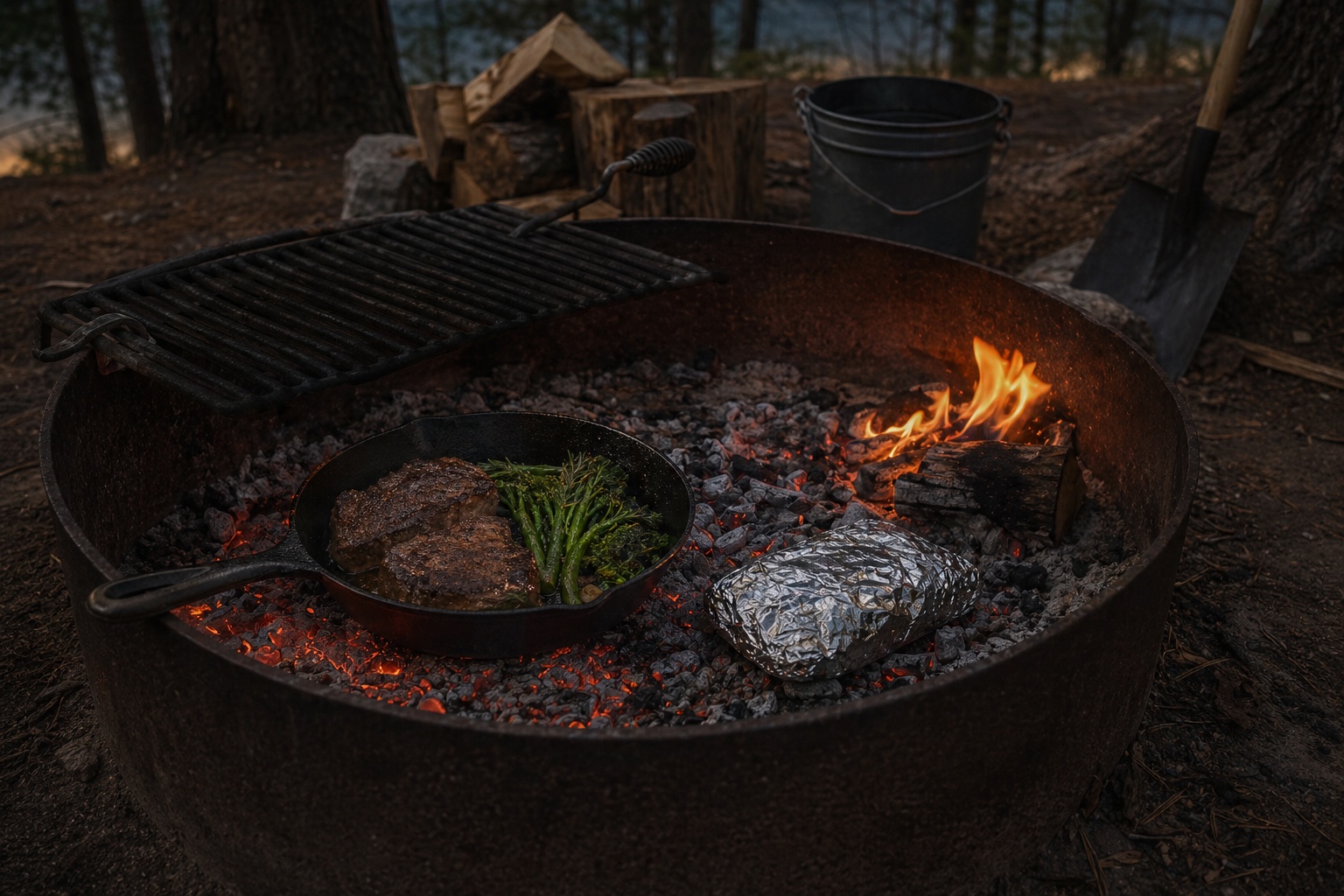
Cooking over flames looks dramatic and usually tastes like burned outside and underdone inside. Cooking over coals is calmer, hotter in the right way, easier to control, and much more forgiving.
Flames are for making coals
The fire you cook over is usually not the fire you just lit. Start with kindling, build a clean fire, and let the wood turn into a bed of coals. That is where the useful heat lives. Tall flames move around, flare up, and punish whatever is closest.
A good coal bed lets you cook like you have a rough outdoor stovetop. You can rake coals under the pan for heat, pull coals away to slow down, and keep fresh wood burning on one side so new coals are ready later.
HEAT ZONES
Build a coal bed you can control
Cooking over coals works because the heat is movable. Treat the fire ring like a rough stovetop with zones.
| Zone | Use it for | Move |
|---|---|---|
| Coal factory | Burning new wood down on one side. | Feed small dry pieces so you always have fresh coals coming. |
| Hot zone | Boiling, searing, heating cast iron, foil packets that need punch. | Rake more coals under the pan, then back off before scorching. |
| Gentle zone | Finishing food, holding tortillas, warming sauce, resting pans. | Use fewer coals and more distance. |
| No-heat landing | Emergency spot for food that is running too fast. | Know where the pan goes before it flares or burns. |
COAL FLOW
Cook after the fire stops showing off
- 1. Start earlyGive the wood time to turn into coals before dinner pressure starts.
- 2. Burn cleanSmall dry wood makes better coals than a smoky log pile.
- 3. Rake heatMove coals under the food; do not chase flames around the ring.
- 4. Shut it down coldDrown, stir, feel for heat, and repeat until nothing is hot.
Build for cooking, not just light
Use dry wood and make a small, clean fire. Big smoky fires create uneven coals and make cooking miserable. Add fuel gradually and let the first load burn down before you commit food to the grate.
If you have a fire ring with a grill, scrape it, heat it, and oil the food instead of assuming the grate is clean. If you are using cast iron, preheat it slowly so oil does not flash and food does not weld itself to the pan.
Move the heat, not the food
Rake coals into the area under the pan or foil packet. If the food is cooking too fast, move some coals away. If it is dragging, add a few more. That is easier than constantly picking up a hot pan and looking for a magic spot.
Keep a small live flame on one side if you need a continuing supply of coals. Treat it like a coal factory, not the cooking surface.
Cook with a safety margin
Grease, loose sleeves, plastic utensils, paper plates, and dry grass all behave badly around fire. Keep the kitchen organized before you light anything. Have water nearby and know where the shovel is.
When dinner is done, the job is not done. Spread the coals inside the ring, add water, stir, and keep going until the fire is cold. A fire that is merely quiet is not necessarily out.
Cook over this
- The food sits over orange coals, not tall flame.
- You can move heat around with a stick or shovel.
- Water and tools are ready before cooking starts.
Wait before putting food on
- Everything tastes like smoke and black sugar.
- The pan is too hot to control before food goes in.
- Someone walks away from a live cooking fire.
Field note
Use flames to make the cooking surface; use coals to cook the food.