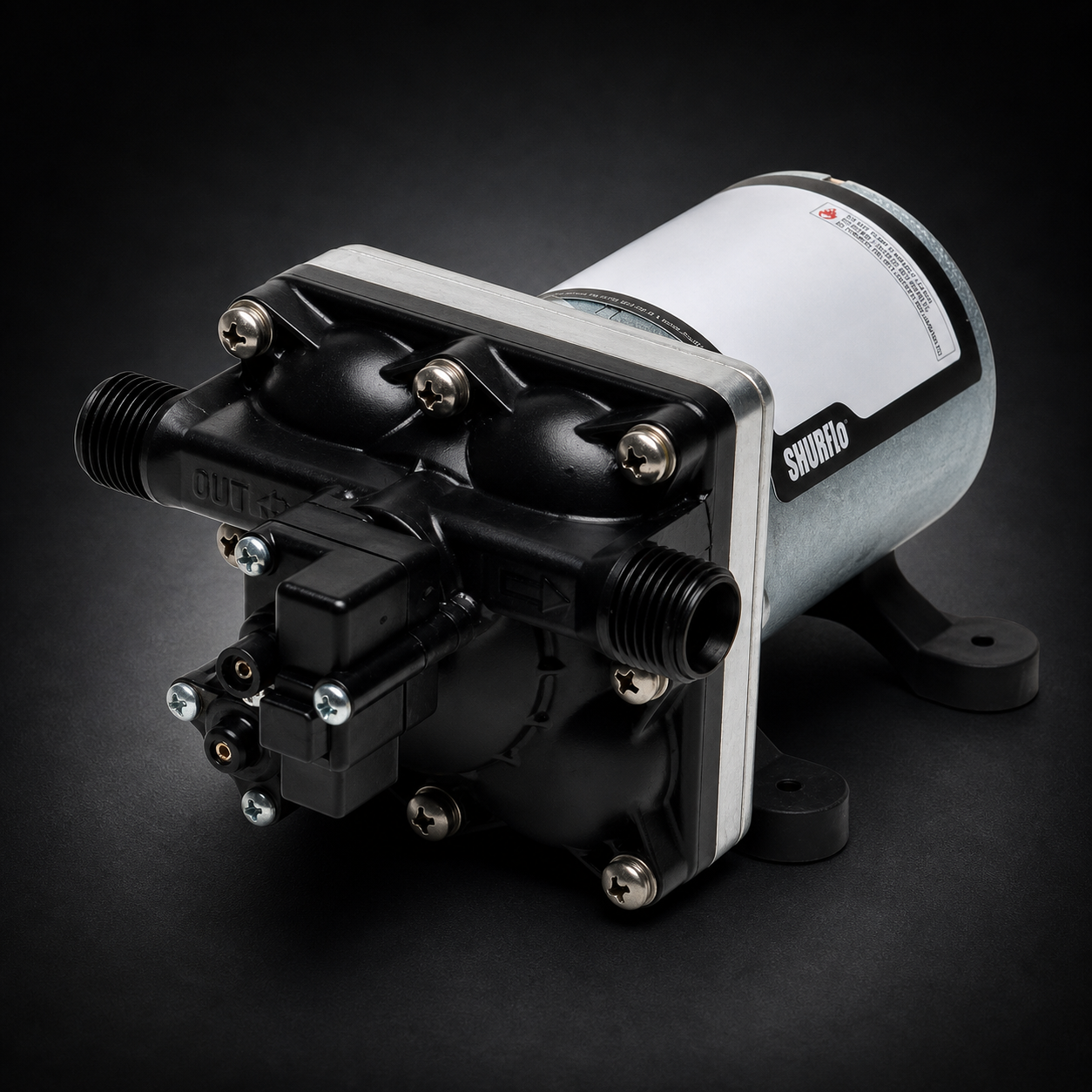
Shurflo 4008 Revolution Water Pump

A 12V RV water pump that can make a camper sink feel normal, as long as the surrounding plumbing is quiet, serviceable, fused, and easy to drain.

Shurflo 4008 Revolution Water Pump product photo
12V pump3.0 GPMVan water
Overview

The 4008 is a common RV demand pump; the quality of the install decides whether it feels civilized or irritating.

On paper, the useful part is simple: a 12V diaphragm pump that moves up to 3.0 GPM, shuts off around 55 psi, and restarts as line pressure drops. In a van, the real question is whether you can reach the strainer, shut the pump off quickly, find leaks, and drain the system before a freeze.

The pump belongs close to the fresh tank on an individual fused circuit, with a strainer before the inlet and flexible hose on both sides so vibration does not turn the cabinet into an amplifier. Rigid pipe directly at the pump is how a small convenience upgrade becomes noisy.

I would treat this as a system part, not a shopping-cart part. The pump, tank, fittings, hose, switch, fuse, faucet, gray-water path, and winterizing plan all need to make sense together.


Best forCamper sinks, trailer water systems, and wash stations where stored water needs steady pressure and the pump can remain accessible.
Not forUltra-simple kits where gravity flow works, or cramped cabinets where you cannot inspect fittings, clean a strainer, or drain the pump.

The pump is not the whole water system. It is the moving part that reveals whether the rest of the water system was planned.

Where to Buy

Shurflo 4008 Revolution Water Pump

A 12V demand pump for small RV, trailer, and campervan fresh-water systems when the install includes proper filtering, wiring, and service access.

Direct product link for current details and pricing.

View product →
Quick Read
Role
Pressurized water
Best Fit
Small pressurized sink or rinse systems with a fresh tank, gray-water plan, and accessible cabinet space
Why It Works
The built-in pressure switch lets the pump run on demand instead of needing a separate faucet routine
Skip If
You cannot add a strainer, fused circuit, leak access, or freeze-drain path without tearing the build apart
At a Glance
Flow
Rated up to 3.0 GPM at open flow; actual faucet flow drops as pressure and restrictions rise.
Pressure
Factory control is around 55 psi shutoff and 40 psi restart on the 4008-101 model.
Circuit
Plan a dedicated fused 12V circuit; Pentair lists a 10A recommended fuse and a 15A switch.
Inlet
A strainer before the pump is not optional if you want the valves and diaphragm to stay clean.
Hose
Use flexible high-pressure hose at both ports to reduce vibration and protect fittings.
Duty
This is an intermittent-duty fresh-water pump, not a continuous-transfer pump.
System Layout

A sensible simple run is fresh tank, tank shutoff, inlet strainer, short flexible hose, pump, another flexible hose, then the faucet or controlled branch. Keep the pump low enough to prime easily, close enough to the tank to avoid a long suction run, and turned so the strainer bowl and pump head can be reached later.

If a drinking-water filter is part of the build, do not starve the pump by putting a restrictive filter on the inlet side. Give filters their own planned branch or place them where flow restriction will not make the pump chatter.

Install Checks
Before Power
Confirm polarity, fuse size, switch rating, wire gauge, and a clean ground before the first test.
First Fill
Run the pump with doors open and a dry towel under the fittings so even a slow seep shows up.
Noise
If the pump sounds harsh, look for rigid pipe, a flexible cabinet panel, overtightened feet, or a restricted inlet.
Freeze Plan
Drain the tank, lines, pump body, and low points before freezing weather; frozen water can ruin the pump.
My Notes

This is a system part. Buying the pump is easy; routing, filtering, wiring, and draining it cleanly is the work. A loud, buried, impossible-to-service pump gets old fast.

  • Put the manual pump switch somewhere obvious so it can be shut off when the van is unattended.
  • Leave enough room to clean the inlet strainer without removing the cabinet.
  • Do the boring leak test before gear, drawers, and insulation hide the fittings.
  • If the pump cycles with every tiny faucet movement, look for restrictions, air, leaks, or a clogged strainer before blaming the pump.
Explore more gear

Keep building the kit around gear that solves real problems.

See all gear →