Overview
Alternator charging only works well when it is controlled, fused, and matched to the house battery.
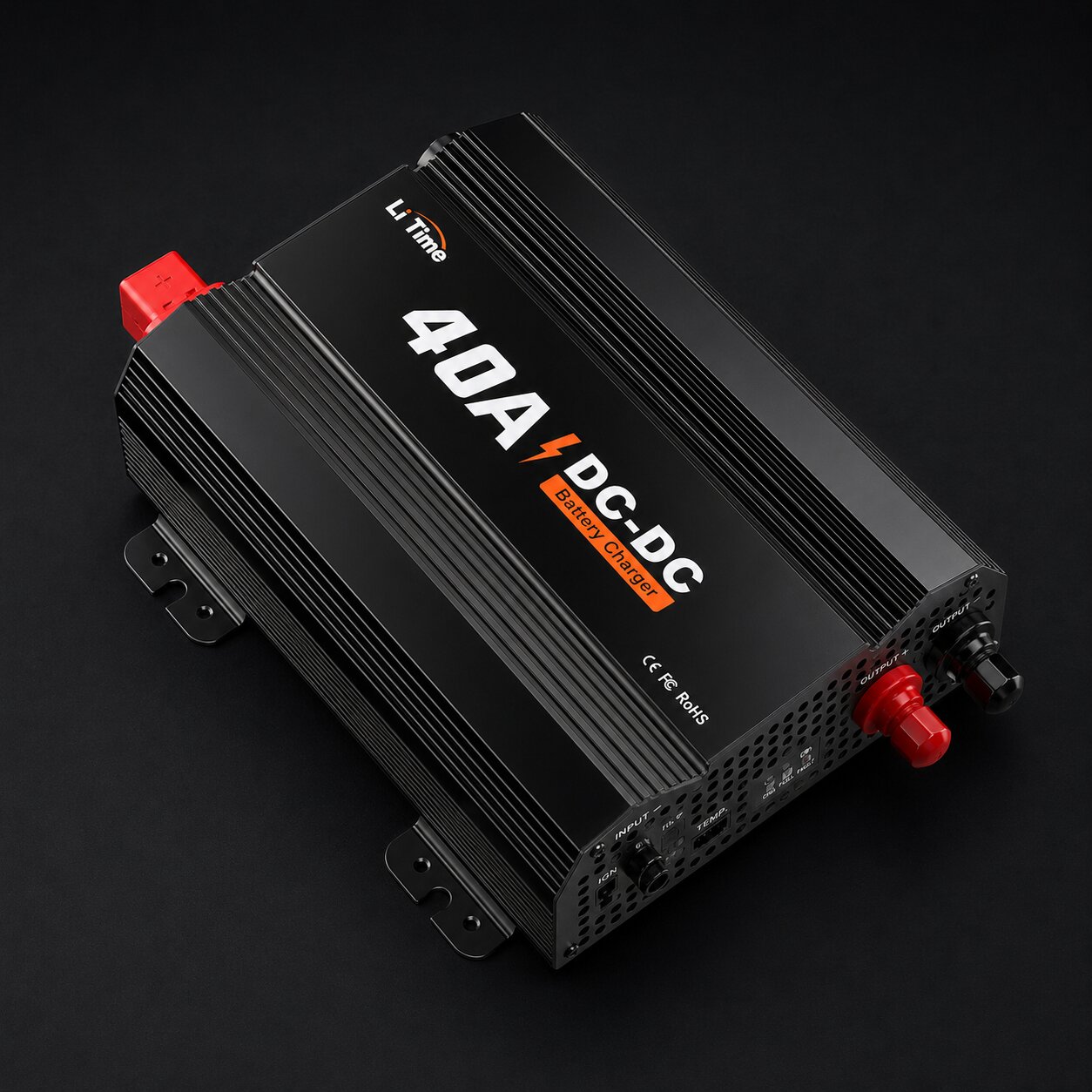
The LiTime 12V 40A DC-DC charger with MPPT is meant to sit between a starter battery/alternator, optional solar input, and a 12V house battery. LiTime lists 40A charging current, up to 93% efficiency, 600W maximum alternator input, and 600W/30V maximum solar input.
That makes it useful for a van, truck, or trailer that runs a fridge, fan, lights, water pump, laptop charging, or other real house loads. It is also the place where sloppy wiring stops being cute: the input and output cables need to be sized by run length, protected by fuses or breakers near the battery/source, and routed so vibration and heat do not slowly damage the system.
The battery profile matters too. LiTime lists support for SLA, AGM, GEL, calcium, and lithium profiles, but the setting still needs to match the actual house battery manufacturer’s charging requirements before the charger is allowed to run unattended.
The charger is the easy purchase. The safe charge path is the real project.