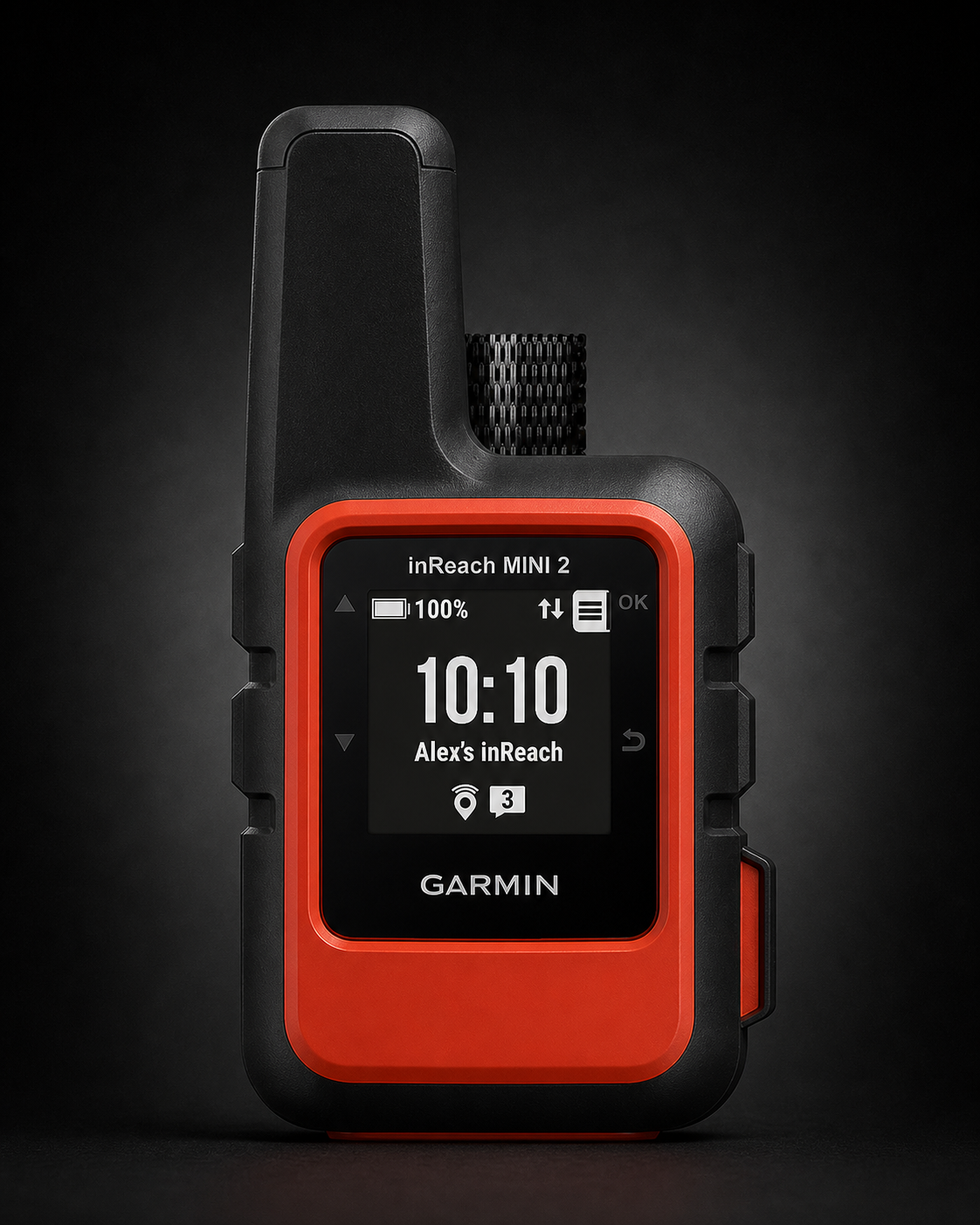
Garmin inReach Mini 2

A compact satellite communicator for trips where no service is the actual condition you need to plan around.

The important part is not owning it. The important part is activating, testing, charging, and carrying it where you can reach it.

Garmin inReach Mini 2 product photo
Satellite messengerSOSCompact
Overview

This is not a camping gadget. It is a communication fallback when the phone becomes a camera with no bars.

Garmin says the inReach Mini 2 needs an active satellite subscription for the communication features that matter most here: SOS, messaging, check-in messages, tracking, location requests, weather, MapShare, and LiveTrack.

Without a subscription, it can still do limited device jobs like saving waypoints, activity recording, and navigation, but that is not the reason to carry one as safety gear.

It also needs a clear view of the sky to send messages and tracking points over the Iridium satellite network. Bottoms of canyons, dense cover, vehicle interiors, and bad antenna orientation can make communication slower or less reliable.

The setup matters before the trip: subscription active, Garmin Messenger or Explore synced, contacts and check-in messages loaded, a test message confirmed outdoors, and someone at home briefed on what each check-in means.


Best forRemote camping, solo travel, off-road trips, hunting, hiking, and no-service routes where someone needs a way to hear from you.
Not forShort trips in reliable service, people who will not keep the subscription active, or anyone treating SOS like a substitute for planning.

Safety gear only helps if it is charged, active, and already understood before the problem starts.

Where to Buy

Garmin inReach Mini 2

Compact satellite communicator for no-service trips, with communication features that require an active satellite subscription.

Direct product link for current details and pricing.

View product →
Quick Read
Role
Satellite communicator
Best Fit
No-service trips and remote travel
Why It Works
Two-way messaging, check-ins, tracking, weather, and SOS can work outside cell coverage when the subscription is active and the device can reach satellites
Skip If
You never leave reliable service or you will not activate, test, charge, and carry it properly
At a Glance
Function
Two-way satellite messaging, check-ins, tracking, weather, and SOS with an active plan.
Subscription
Garmin lists communication features as requiring an active satellite subscription.
Signal
Needs a clear view of the sky; point the antenna toward the sky when sending.
Durability
Garmin manual lists IPX7 water rating and a built-in rechargeable lithium-ion battery.
Watch Out
SOS is for emergency situations, not a permission slip for poor planning.
Reality
It belongs on your body or in a grab location, not deep in a bin.
My Notes

This is one of the few electronics that belongs in the safety category, not the convenience category. It only helps if it is charged, activated, tested, synced, and reachable when the trip goes sideways.

  • Confirm the service plan is active before leaving cell coverage.
  • Send Garmin's test message outdoors before the trip so you know the device and subscription are working.
  • Set check-in recipients and plain-language meanings ahead of time, then sync the device after changes.
  • Keep it on your body or in a grab location during the actual risky part of the trip.
  • Do not count on it from the bottom of a canyon, inside a vehicle, or under heavy cover without moving to a better sky view.
Explore more gear

Keep building the kit around gear that solves real problems.

See all gear →